

THE HAKKA JOURNAL
Choosing the Right Smoker Oven for Restaurants
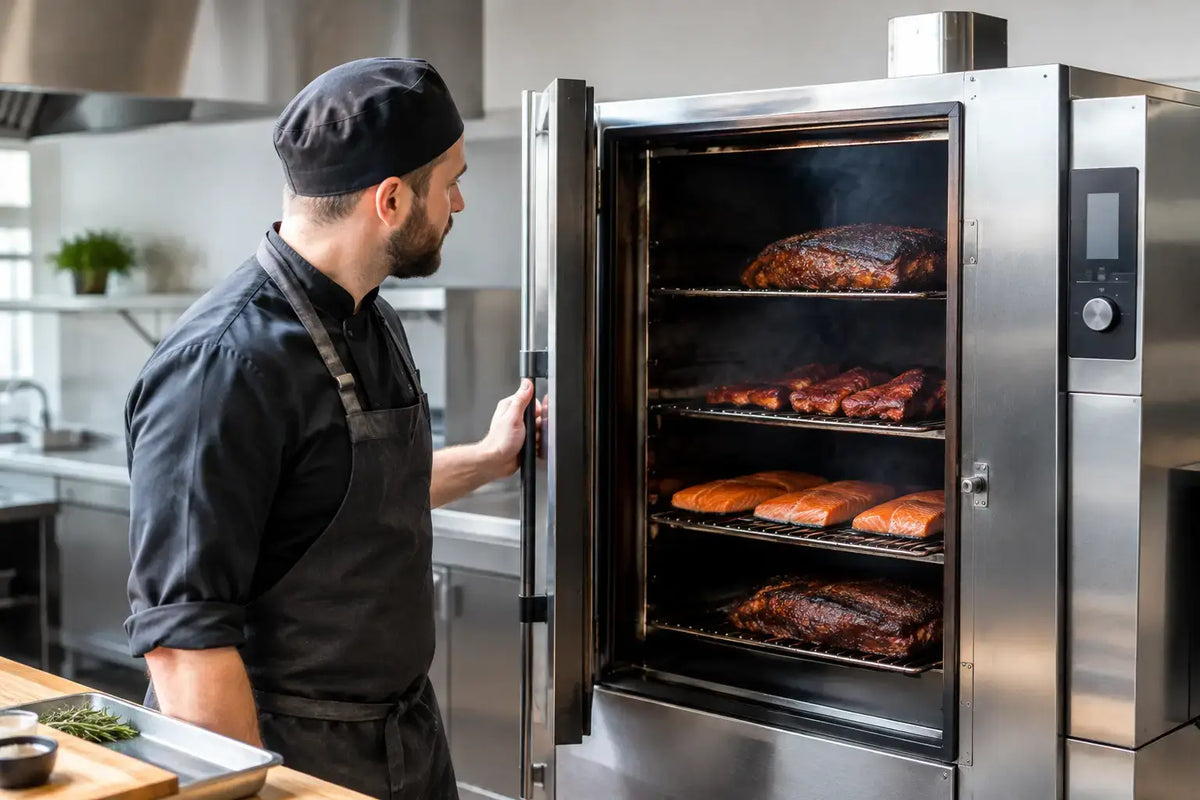
The brisket that sells out at 7:30 p.m. and the ribs that arrive dry at 8:15 usually have the same root cause: production capacity was treated as an afterthought. A smoker oven for restaurants needs to do more than produce a good first batch. It must hold temperature through repeated door openings, carry enough product for the service window, and deliver predictable results when the kitchen is busy.
For BBQ operations, smokehouses, caterers, and restaurants adding smoked proteins to the menu, the right unit changes more than flavor. It can reduce overnight labor, tighten portion consistency, and make prep scheduling far easier. The best choice depends on volume, menu mix, available utilities, ventilation, and how the smoker fits into the rest of the kitchen workflow.
Start With the Production Need
Do not choose a commercial smoker by exterior size alone. Start with the number of pounds you need to serve during a normal day and the amount of finished product you want available before peak service. A restaurant smoking two pork shoulders for weekend specials has very different needs from an operation producing brisket, ribs, chicken, sausage, and smoked vegetables six days a week.
Consider the full cook cycle, including loading, smoking, holding, cooling, and cleanup. A smoker that is technically large enough can still create a bottleneck if one long brisket cook prevents the next batch of ribs or chicken from starting. Multi-rack cabinet units work well when operators need to cook several products at once, provided there is enough vertical clearance and rack spacing for the cuts being smoked.
Capacity should leave room for growth. Running every rack at maximum density can restrict airflow, extend cook times, and make bark development uneven. It also leaves no practical margin for a catering order, a holiday rush, or a new menu item that performs better than expected.
Choose the Right Smoker Oven for Restaurants
Electric cabinet smokers are a practical commercial solution for operators who need controlled temperatures and repeatable production without dedicating an employee to fire management. They are especially useful for ribs, poultry, pork, sausage, fish, and smaller brisket runs. Digital controls make it easier to program a target temperature, monitor the cook, and train staff on a defined process rather than relying on one pitmaster's instincts.
Wood-fired and offset smokers offer a distinct live-fire profile, but they demand fuel management, space, ventilation planning, and skilled labor. For a restaurant built around traditional barbecue, that trade-off may be worth it. For a full-service restaurant where smoked proteins support a broader menu, an electric smoker oven often provides more consistent output with less labor pressure.
Pellet-fired equipment sits between these approaches. It can provide wood smoke flavor with automated fuel delivery, but owners should account for pellet storage, moving parts, cleaning requirements, and recovery time after frequent door openings. The right fuel system is not simply a flavor decision. It is an operating-cost and labor decision.
Temperature Control Determines Consistency
A commercial smoker should maintain a stable setpoint throughout the cabinet, not merely display the right number at one sensor. Uneven heat can leave chicken underdone on one rack while drying ribs on another. That creates unnecessary checking, moving, and rework during prep.
Precision digital control is valuable because it standardizes the process across shifts. If the executive chef develops a successful brisket schedule at 225°F, the night crew should be able to repeat it without guessing at damper positions or cycling the heat manually. A clear control panel, readable display, and reliable probe placement all support this consistency.
Pay attention to the usable temperature range, not just the maximum setting. Low-and-slow smoking commonly occurs between 180°F and 275°F, but higher settings can help finish chicken skin, accelerate certain cooks, or support hot holding when the workflow requires it. The unit should recover reasonably after loading cold product or opening the door. Slow recovery adds time to every cook and disrupts production planning.
Smoke Generation and Moisture Management
Smoke flavor must be controllable. Too little smoke makes the equipment irrelevant; too much can turn poultry, fish, or vegetables bitter. Some commercial units use wood chips or pucks in a dedicated smoke box, while others rely on pellets or a separate combustion chamber. Choose a system your team can load, clean, and operate consistently.
Moisture is equally important. A water pan or humidity-friendly cabinet environment can help protect product during long cooks, particularly lean proteins and sausage. But excess moisture can soften bark and prevent the exterior texture customers expect from smoked meats. The proper setting depends on the product. Pork shoulder benefits from a different approach than beef jerky, salmon, or smoked chicken wings.
A smoker also needs adequate airflow. Crowding racks, blocking vents, or loading pans with deep product can undermine even a well-built unit. Build rack loading standards into your prep procedures so every shift follows the same spacing and pan placement.
Build Quality Matters in a Working Kitchen
Restaurant equipment is opened, loaded, wiped down, moved, and occasionally mishandled. Thin doors, weak hinges, poor latches, and inadequate insulation become expensive problems when they cause heat loss or take a unit out of service. Commercial-grade stainless steel construction, insulated walls, durable door hardware, and removable racks are practical features, not cosmetic upgrades.
Cleaning access deserves close attention. Grease, rendered fat, ash, and smoke residue accumulate quickly in a smoker. Look for interiors that can be wiped down without reaching around exposed components, drip-management features that direct grease safely, and racks that can be removed for proper washing. A difficult cleaning routine gets shortened during a busy week, and shortened cleaning routines lead to odor, flavor transfer, and maintenance issues.
Before ordering, verify the electrical requirements, circuit capacity, exterior footprint, door swing, and clearance needed for safe placement. Measure delivery paths too. A smoker that fits the kitchen layout but cannot pass through the back door creates an avoidable problem.
Plan the Workflow Around the Smoker
The smoker should connect logically to receiving, refrigerated storage, prep, cooking, holding, and service. Raw meat needs a safe staging area before loading. Finished product needs a plan for resting, hot holding, cooling, or rapid service. Without that plan, the smoker may improve the cook while creating congestion everywhere around it.
For example, an operation producing smoked pulled pork may season shoulders in a prep area, hold them overnight in refrigeration, smoke them early, rest and pull them in hotel pans, then transfer portions to a steam table or refrigerated storage for later reheating. Each handoff affects food quality, labor, and food safety. The smoker is one part of the system.
This is where equipment compatibility matters. Refrigeration, meat prep equipment, pans, shelving, and transport carts should support the same production volume. Hakka Brothers serves this type of commercial workflow with professional-grade cooking, meat-processing, and cold-storage equipment designed for practical foodservice use.
Calculate Cost Beyond the Purchase Price
The lower-priced unit is not always the lower-cost choice. Evaluate power consumption, wood or pellet use, expected cleaning time, replacement parts, warranty support, and the labor required to produce each batch. A smoker that saves an hour of active supervision per day can justify a higher initial equipment cost quickly.
Also calculate yield. Reliable temperature control and a properly sized cabinet can reduce overcooking, shrinkage, and discarded product. For high-cost proteins such as brisket, beef ribs, and salmon, even a modest improvement in yield has a direct effect on food cost.
Avoid buying capacity you cannot use, but do not underbuy a smoker that forces multiple rushed batches. The productive middle ground is equipment sized for current demand with enough headroom to handle the orders your operation is actively pursuing.
A good smoker oven earns its floor space when the crew can load it with confidence, follow a repeatable program, and pull product that meets the same standard on a quiet Tuesday and a packed Saturday night.
Keep exploring
All guides ↗
Pizza Peel Size: Check the Head, Reach and Workspace
Choose a pizza peel by checking the working head, assembled reach, and station space. Review two Clivia detachable-handle options and a practical buying checklist.
Read the guide
Best Equipment for Burger Kitchens That Perform
Choose the best equipment for burger kitchens with practical guidance on griddles, refrigeration, prep, frying, holding, and workflow capacity planning.
Read the guide
2 vs 3 Bottle Sauce Warmer: Match Your Dessert Menu
Compare two- and three-position EasyRose sauce warmers by simultaneous topping needs, bottle compatibility, and dessert station workflow.
Read the guide
Join the conversation