

THE HAKKA JOURNAL
Best Equipment for Burger Kitchens That Perform
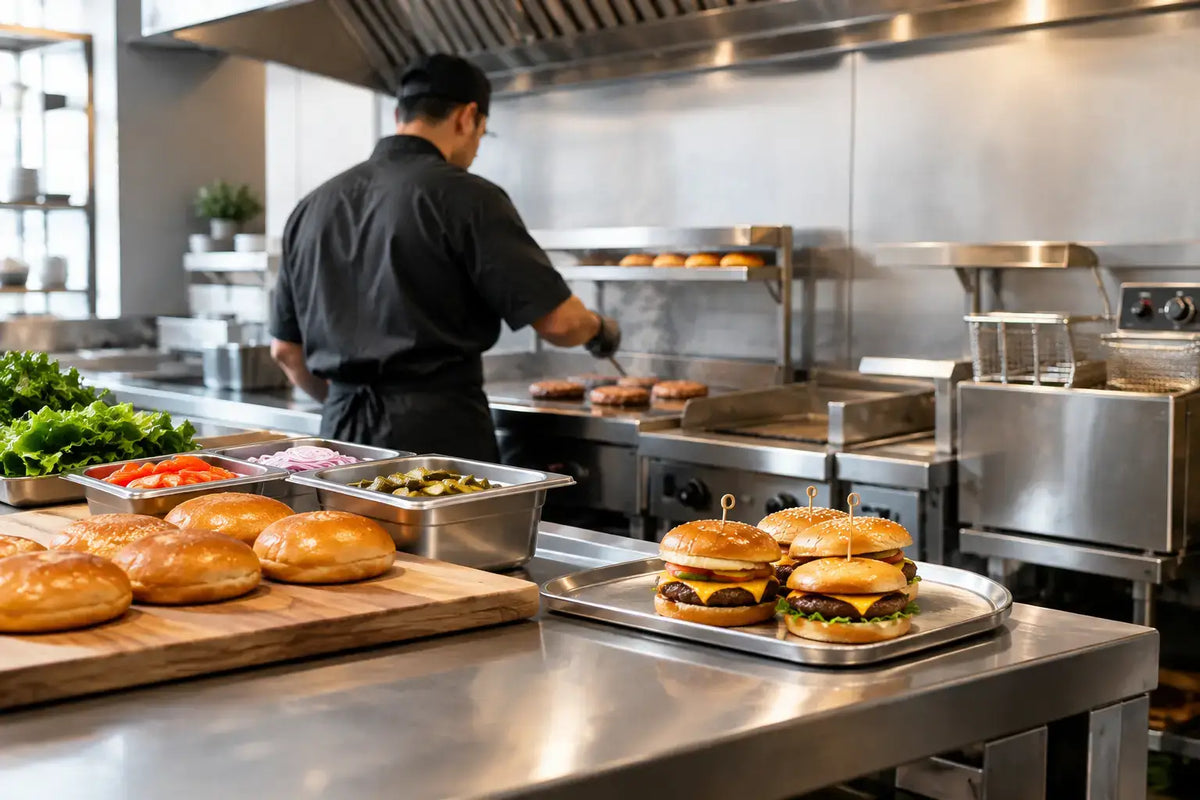
A burger kitchen can lose a lunch rush long before the grill fails. The real breakdown usually starts with a crowded prep table, warm toppings, a fryer that cannot recover temperature, or no place to hold finished fries. The best equipment for burger kitchens is not a random collection of stainless steel. It is a connected production system built around speed, safe food handling, and repeatable output.
For a compact burger counter, the right equipment may be a focused line with a griddle, fryer, refrigerated prep table, and undercounter storage. A high-volume restaurant, ghost kitchen, or multi-unit operation may need wider cooking surfaces, dedicated refrigerated holding, higher-capacity meat processing, and more room for order assembly. Buy for the rush you need to handle, not only for the tickets you handle on a quiet Tuesday afternoon.
Best Equipment for Burger Kitchens Starts With Throughput
Start by mapping the path of one burger: raw meat arrives, is stored, ground or formed if applicable, held cold, cooked, dressed, assembled, and served with fries or sides. Every handoff should be short, clear, and supported by equipment with enough capacity for peak demand.
The common mistake is overspending on one visible piece of cooking equipment while underbuilding cold storage, prep capacity, and holding. A 36-inch griddle may cook enough patties, but it will not solve a bottleneck caused by a shallow ingredient rail or a reach-in refrigerator that forces staff to walk away from the line.
Before selecting models, establish four operating numbers: projected peak burgers per hour, average patty weight, menu mix, and available utility capacity. A 4-ounce smashburger operation has different needs than a restaurant cooking 8-ounce thick patties to temperature. Likewise, a menu with loaded fries, fried chicken, or onion rings changes the fryer requirement substantially.
The Griddle Is the Main Production Surface
For most burger concepts, a commercial gas griddle is the core cooking machine. It provides the direct contact heat needed for crust development, quick recovery, and consistent patty output. Look first at usable plate width, BTU output, plate thickness, burner zoning, grease management, and the depth of the cooking surface.
A 24-inch griddle can work for a limited menu or lower-volume operation. A 36-inch unit is often the practical starting point for a dedicated burger restaurant because it creates separate zones for patties, buns, onions, and finishing work. Busy operations commonly benefit from 48-inch or wider griddles, especially when multiple cooks need room during peak service.
Plate thickness affects more than durability. A heavier plate stores heat and recovers better when cold patties hit the surface in batches. That helps prevent pale burgers and inconsistent searing. Thermostatic controls can suit operations that require repeatable zone temperatures, while manual controls give experienced grill cooks direct response. Neither option is automatically better. Choose based on menu precision and staff training.
A charbroiler can add value if your menu depends on flame-grilled flavor and visible grill marks. It is not a substitute for a griddle in every burger program. Charbroilers produce more flare-up, require more cleaning attention, and can be less efficient for smash-style burgers, onions, and buns. Some high-output kitchens use both: a griddle for standard burgers and a charbroiler for signature items.
Build a Fry Station That Keeps Up
Fries are frequently the second production engine in a burger kitchen. If fry capacity falls behind, completed burgers wait, dining quality drops, and the expediting area becomes congested. Select a commercial fryer according to pounds of product per hour, not just oil capacity.
A single fryer may be sufficient for a simple operation with a modest fry menu. A two-basket fryer or multi-well configuration becomes more practical when fries share the station with chicken, appetizers, or breaded products. Dedicated wells prevent flavor transfer and make oil management easier.
Temperature recovery matters during back-to-back drops. When oil temperature falls and stays low, fries absorb more oil, cook unevenly, and take longer to finish. Choose a commercial fryer with recovery performance appropriate for your actual batch size. Also plan for filtration, oil disposal, and safe access for daily cleaning. These details directly affect food cost and labor.
A heated fry dump station or heat lamp should sit close to the fryer and assembly line. Its job is short-term holding, not storage. Fries should move quickly from fryer to seasoning to bag or plate. If orders regularly sit under heat for too long, the answer is usually better ticket flow or more fryer capacity, not a hotter holding cabinet.
Refrigeration Protects Quality and Food Safety
Cold storage is where burger consistency begins. Raw beef, formed patties, cheese, produce, sauces, and prepared toppings all need controlled refrigeration and logical separation. A reach-in refrigerator provides bulk storage, while an undercounter refrigerator or refrigerated prep table keeps the line stocked without forcing staff into the walk-in every few minutes.
For burger assembly, refrigerated prep tables with ingredient pans create a fast, organized cold station. Choose rail capacity based on your real topping count, including backup pans for high-use ingredients. A narrow rail may look sufficient on paper but becomes a constraint once you add lettuce, tomatoes, onions, pickles, cheeses, sauces, and specialty toppings.
Maintain clear raw-to-ready-to-eat separation. Raw patties should not share casual, unplanned space with sliced tomatoes or finished sauces. Use dedicated pans, labeled storage, and an equipment layout that reduces cross-traffic. Commercial refrigeration with reliable temperature control is a production requirement, not just a compliance item.
Meat Prep Equipment Depends on Your Burger Program
Restaurants buying pre-portioned patties need a clean refrigerated staging area and a practical method for portioning and seasoning. Restaurants producing their own burger blend need more capability.
A commercial meat grinder gives operators control over fat ratio, texture, and batch freshness. A meat mixer helps distribute seasoning or combine cuts evenly without overworking the product. For high-volume production, a patty press improves portion accuracy, reduces labor, and helps control food cost. The correct setup depends on whether fresh-ground burgers are a core menu promise or an occasional specialty item.
If you grind in-house, avoid buying a machine based only on motor power. Consider output rate, feed opening, plate availability, sanitation access, and how much product must move through the machine before each service period. Hakka Brothers is positioned to support this type of workflow with commercial meat processing equipment alongside hot-line and refrigeration needs, reducing the need to source a burger kitchen piece by piece.
Do Not Underestimate Assembly, Holding, and Smallwares
The final few feet of the line determine whether a well-cooked burger reaches the customer in good condition. A stainless steel worktable gives staff a durable surface for wrapping, plating, and staging. Add shelves or undershelves for packaging, gloves, paper products, and frequently used smallwares so employees do not leave the station during a rush.
Use insulated food pans, squeeze bottles, portion scoops, spatulas, burger presses, thermometers, and sheet pans sized for your actual workflow. These tools are inexpensive compared with cooking equipment, but poor tool selection slows every ticket. Wide griddle spatulas, for example, are essential for lifting thin patties cleanly. Instant-read thermometers support safe verification for thicker burgers and cooked proteins.
A heated holding cabinet can be useful for cooked proteins, buns, or side items in catering, drive-thru, and high-volume service. It should be selected carefully. Holding equipment supports production timing, but it cannot preserve quality indefinitely. Set holding procedures that protect texture and discard standards that protect the brand.
Plan Utilities, Cleaning, and Service Access
Equipment dimensions are only part of the footprint. Confirm gas type, electrical requirements, hood capacity, clearances, drainage, floor load, and local code requirements before ordering. A powerful griddle or fryer is only useful if the facility can support it safely.
Leave working clearance for cleaning behind and beside equipment. Grease, crumbs, and spilled toppings accumulate quickly in burger operations. Removable grease trays, accessible burners, smooth stainless surfaces, and serviceable refrigeration components reduce downtime and make daily closing more realistic for the staff.
The strongest burger lines are designed around the next hundred orders, not the first ten. Choose commercial equipment that gives cooks enough recovery, prep staff enough cold storage, and expediters enough organized space to move fast without cutting corners. When the line stays controlled at peak volume, every burger has a better chance of leaving hot, properly built, and worth ordering again.
Keep exploring
All guides ↗
Choosing the Right Smoker Oven for Restaurants
Choose a smoker oven for restaurants with the capacity, temperature control, recovery time, and build quality needed for consistent commercial service.
Read the guide
Pizza Peel Size: Check the Head, Reach and Workspace
Choose a pizza peel by checking the working head, assembled reach, and station space. Review two Clivia detachable-handle options and a practical buying checklist.
Read the guide
2 vs 3 Bottle Sauce Warmer: Match Your Dessert Menu
Compare two- and three-position EasyRose sauce warmers by simultaneous topping needs, bottle compatibility, and dessert station workflow.
Read the guide
Join the conversation