

THE HAKKA JOURNAL
Dried Citrus Garnish: Plan Batches Around Your Drink Menu
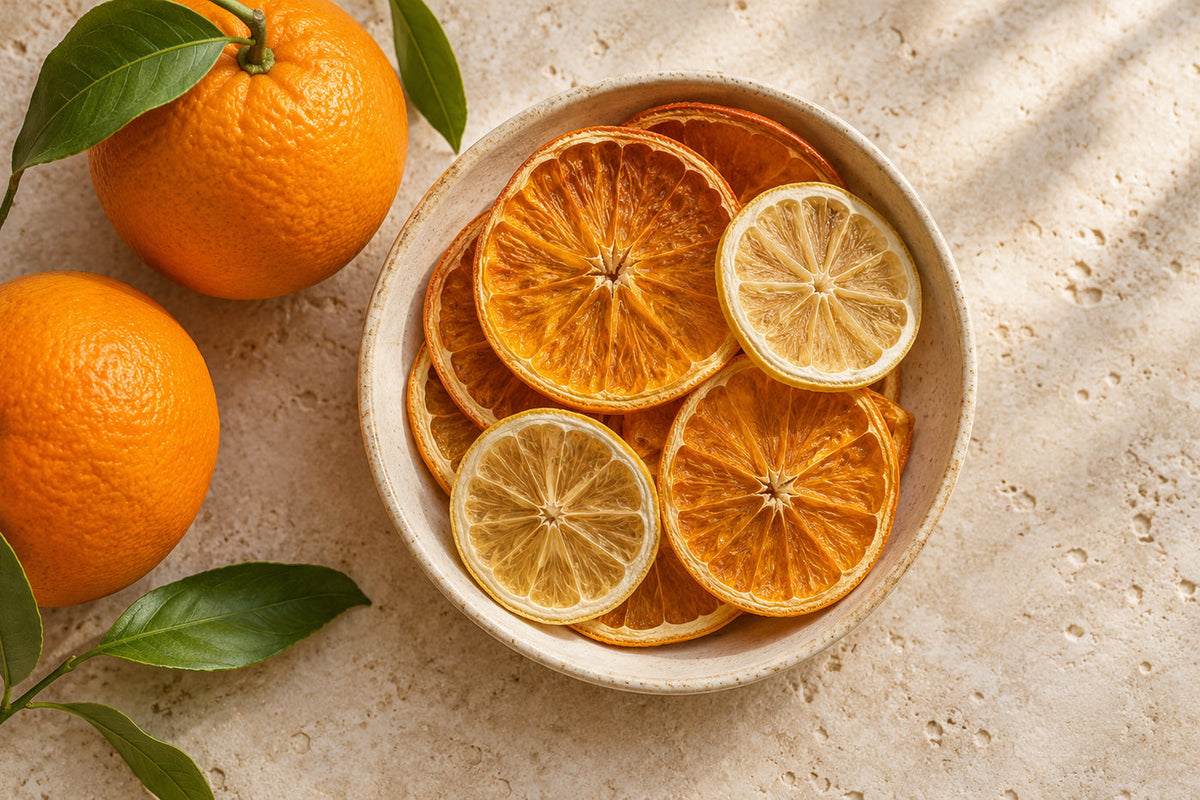
A dried citrus garnish program starts with the drinks you actually serve. Before filling every available dehydrator tray, decide which fruit belongs on each drink, how many acceptable wheels you need, and when the next batch can be prepared.
This guide focuses on batch planning for cafés and bars: building a garnish count, keeping a useful trial record, and matching the workflow to a Hakka food dehydrator.
Plan dried citrus garnish quantities by drink
Make a separate row for orange, lemon, and any other citrus on the menu. Specify the presentation as well: one whole wheel, a half-wheel, or another approved garnish. A wheel intended for a narrow glass may not suit a wide coupe.
Count the expected drinks that use each garnish, then multiply by the pieces per drink. Keep any additional allowance visible as a separate number so the team can review it later.
| Menu use | Expected orders | Wheels per order | Wheels needed |
|---|---|---|---|
| Sparkling orange drink | 24 | 1 | 24 |
| Citrus iced tea | 16 | 1 | 16 |
| Planned extra allowance | — | — | 5 |
| Total target | — | — | 45 |
This example calls for 45 acceptable orange wheels. It does not tell you how many oranges or trays to buy: fruit diameter, slice selection, and your actual batch results determine that next step.

Use a trial batch to build your own yield record
Start with one fruit type and a consistent preparation method. Record the fruit purchased, slices prepared, slices loaded, and finished pieces that meet your presentation standard. Note broken pieces separately instead of quietly counting them toward the service target.
Uniform preparation makes comparisons more useful. University of California's dried citrus slices guidance describes crosswise slicing for citrus. Follow an appropriate food-preparation process and the instructions for your equipment when developing the batch; the planning table here does not replace that process.
Keep a short log with fruit type, slice specification, equipment model, tray arrangement, settings used, observations, and accepted output. When changing the preparation, mark it as a new trial rather than combining unlike results.
For example, if a trial starts with 60 prepared wheels and 48 meet your presentation standard, the observed acceptance rate is 80% for that trial. That is useful purchasing information, but it is not a guaranteed result for the next delivery of fruit. Repeat the observation before relying on it for a larger event.
Do not set a fixed number of slices per tray from the cabinet's tray count alone. Check the loading instructions and the actual fruit dimensions. A larger wheel changes the layout even when the number of trays stays the same.
Match a Hakka dehydrator to the batch workflow
The Hakka QG-C10 10-tray food dehydrator and Hakka QG-C12 12-tray food dehydrator both list digital controls, a rear-mounted fan, removable racks, and a viewing door. They provide two tray-count options to consider alongside your available space and preparation routine.
A higher tray count does not establish a guaranteed number of finished garnishes per cycle. Check the current model's rack dimensions, loading guidance, electrical requirements, and operating instructions before ordering. Plan who prepares the fruit, who records the batch, and when the equipment will be available.
For a broader equipment overview, see our commercial food dehydrator selection guide. Use the batch log to bring a specific requirement to that comparison.

Before-you-buy and batch planning checklist
- Identify every drink using dried citrus and its garnish specification.
- Calculate the required accepted pieces by fruit type.
- Record any extra allowance separately.
- Measure actual trial output rather than assuming a fixed yield per orange.
- Confirm rack dimensions and model-specific loading instructions.
- Check equipment space and electrical requirements.
- Assign preparation, batch review, and replenishment responsibilities.
- Keep production records and follow your established food handling and storage procedures.
Dried citrus garnish planning FAQ
How many orange wheels will one dehydrator produce?
Tray count alone cannot answer that. Wheel diameter, preparation, the approved loading layout, and accepted finished output all affect the result. Use a recorded trial with the model you intend to operate.
Can I use one batch record for oranges and lemons?
Keep separate records so a change in fruit type does not hide differences in preparation or finished appearance. Your process instructions should determine whether foods can share a cycle.
Does this guide give a drying time or storage life?
No. Those decisions require an appropriate process for the food and equipment. This guide helps calculate menu demand and document output; a timer setting alone does not establish readiness or storage life.
When should I update the garnish plan?
Review it when the drink menu, glassware, fruit specification, order volume, or batch process changes. Compare planned pieces with actual service use so the next batch reflects demand.
Keep exploring
All guides ↗
Choosing the Right Smoker Oven for Restaurants
Choose a smoker oven for restaurants with the capacity, temperature control, recovery time, and build quality needed for consistent commercial service.
Read the guide
Pizza Peel Size: Check the Head, Reach and Workspace
Choose a pizza peel by checking the working head, assembled reach, and station space. Review two Clivia detachable-handle options and a practical buying checklist.
Read the guide
Best Equipment for Burger Kitchens That Perform
Choose the best equipment for burger kitchens with practical guidance on griddles, refrigeration, prep, frying, holding, and workflow capacity planning.
Read the guide
Join the conversation