

THE HAKKA JOURNAL
Countertop Charbroilers for High-Output Kitchens
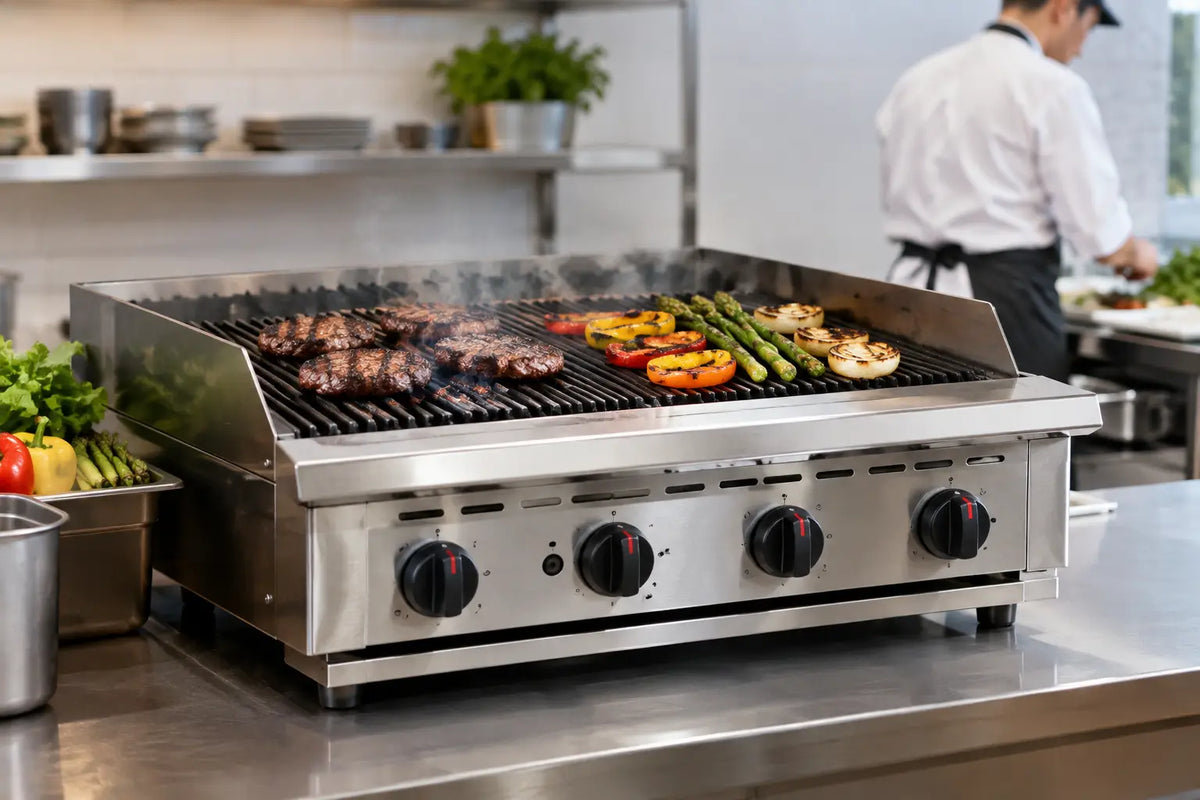
A burger station can fall behind fast when the grill has slow recovery, weak heat zones, or more cooking surface than the kitchen can ventilate properly. Countertop charbroilers solve a specific production problem: they bring open-grate grilling, direct radiant heat, and visible char marks to a compact commercial line. For restaurants that need steakhouse-style finish without dedicating floor space to a large freestanding unit, the right charbroiler can become one of the hardest-working pieces of hot-side equipment.
Where Countertop Charbroilers Earn Their Space
A countertop charbroiler is built for operations where grilled flavor and appearance matter, but every inch of the cook line must produce. Burger restaurants, sports bars, sandwich shops, hotel kitchens, food trucks with approved ventilation systems, caterers, and BBQ concepts can all benefit from a compact charbroiler setup.
The value is not just the footprint. A commercial charbroiler lets cooks produce dark grill marks, caramelized exterior texture, and fat-rendered flavor that a flat griddle cannot fully duplicate. It is particularly effective for burgers, steaks, chops, chicken breasts, sausages, shrimp, kebabs, and sturdy vegetables such as asparagus, peppers, onions, and zucchini.
For meat-focused businesses, the charbroiler can also finish products prepared elsewhere in the operation. A kitchen may portion proteins at a dedicated prep station, use a meat grinder or sausage stuffer for fresh menu items, then send those products to the charbroiler for made-to-order cooking. That division of labor improves consistency and keeps the hot line moving during peak service.
Gas or Electric: Choose for the Building and the Menu
Gas countertop charbroilers are common in high-volume restaurant kitchens because they provide aggressive heat and fast response. Operators can raise or lower flame intensity quickly, making gas practical for menus that move from delicate fish to thick burgers and steaks throughout the day. Gas units also deliver the direct, live-fire character many customers expect from grilled proteins.
Electric charbroilers can be a practical choice where gas service is unavailable or where the operation wants a simpler electrical installation. They may offer more straightforward temperature management, although heat response and recovery can differ from gas-fired equipment. For a lower-volume café, concession operation, or specialized menu with predictable cooking patterns, electric can be the right fit.
The correct choice depends on more than personal preference. Confirm the available utilities, local fire and health requirements, ventilation capacity, and the type of food being cooked. A busy burger program usually benefits from the recovery and high-output capability of a gas unit. A limited menu with lower production demand may place more value on electrical compatibility and controlled operation.
How to Size Countertop Charbroilers for Service
Cooking surface size should match peak ticket volume, not average sales. A charbroiler that handles lunch on a quiet Tuesday may become the bottleneck during Friday dinner if cooks cannot maintain space between portions or create separate zones for different proteins.
Start by looking at the actual number of items that must be on the grill during the busiest 10 to 15 minutes of service. Include holding space, turning space, and a cooler area for finishing thicker cuts. Packing every inch of the grate with product lowers airflow around the food, reduces searing performance, and makes it harder to manage doneness.
Heat output matters as much as grate width. On gas models, BTU rating is one indicator of available power, but it should be evaluated with burner design, heat distribution, radiant construction, and grate material. A high BTU number alone does not guarantee even cooking. The goal is dependable recovery after cold burgers, chicken, or steaks hit the surface in volume.
For many small operations, a compact unit with a manageable cooking area is more useful than an oversized grill that overwhelms the exhaust system or leaves valuable counter space unused. Larger kitchens may install multiple countertop units to create dedicated stations, such as one charbroiler for burgers and another for chicken or vegetables. This can reduce cross-contact concerns and make ticket flow easier to control.
Grates, Radiants, and Heat Zones Affect Food Quality
The grate is where the charbroiler earns its place on the line. Heavy cast iron grates retain heat well and produce pronounced sear marks. They are a strong choice for burgers, steaks, and chops, though they require disciplined brushing and seasoning practices to prevent buildup and sticking. Stainless steel grates can be easier to maintain and may suit operations that prioritize lighter foods or frequent menu changes.
Adjustable grate height is a highly practical feature. Moving the grate closer to the heat source increases searing intensity, while raising it provides more control for thicker proteins or foods prone to scorching. This adjustment allows one unit to handle a wide range of menu items without forcing cooks to compensate with inconsistent timing.
Below the grates, radiants or lava rock systems distribute heat and protect burners from drippings. Radiants tend to support cleaner operation and more predictable heat transfer. Lava rock can contribute a traditional grilled character, but it requires regular maintenance because grease accumulation can create flare-up and sanitation issues. Neither design is automatically better. The right option depends on the menu, cleaning discipline, and how much direct grease exposure the operation expects.
Multiple independently controlled heat zones are worth considering for a varied menu. A cook can sear burgers over high heat on one side, finish chicken at a more moderate setting on the other, and keep vegetables away from heavy protein drippings. Zone control reduces wasted energy during slower periods and gives the team more flexibility when tickets stack up.
Ventilation Is Part of the Equipment Decision
A charbroiler creates smoke, grease vapor, and heat. It should never be selected as though it were only a countertop appliance. Before purchasing, verify the hood system, fire suppression requirements, clearance rules, gas connection specifications, electrical needs, and local code requirements for the intended installation.
This matters especially for operations moving from a griddle-heavy menu to one with open-grate grilling. The hood may have been adequate for existing equipment but insufficient for the additional smoke and grease load of a charbroiler. Installing the right unit under inadequate ventilation creates an operational problem that no amount of staff training can fix.
Plan the station around access as well. Cooks need room to load and turn product safely, clean the grates, remove grease trays, and reach controls without leaning across active cooking surfaces. Keep raw-protein staging, seasoning, landing pans, and handwashing access organized around the grill so the station supports fast, safe movement.
Daily Cleaning Protects Output and Equipment Life
Charbroilers perform best when grease and carbon are removed before they affect heat flow. At the end of each shift, brush the grates while they are still warm enough to release residue safely. Empty and clean grease trays, inspect the area beneath the cooking surface, and remove debris that could restrict burners or create flare-ups.
A deeper scheduled cleaning should address radiants, burner ports, grate condition, and surrounding surfaces. The schedule will depend on volume. A high-output burger operation may need more frequent attention than a café using the charbroiler for a limited dinner menu.
Training is essential. Staff should understand that flare-ups are not a sign of better grilling. They are usually a sign that excess grease, poor product management, or neglected cleaning is taking control of the cooking process. Controlled heat produces more consistent food and protects the equipment.
What to Confirm Before Buying
Before adding a charbroiler to the line, confirm these operational points:
- Available counter width, depth, overhead clearance, and safe working space
- Gas type or electrical requirements, including the building's available capacity
- Hood, fire suppression, and local code requirements for the installation
- Cooking surface size and heat zones needed for peak ticket volume
- Grate material, adjustable height, grease management, and daily cleaning access
The best countertop charbroiler is the one that gives your cooks enough heat to sear with confidence, enough control to protect food quality, and enough capacity to keep orders moving when the dining room is full.
Keep exploring
All guides ↗
How to Reduce Prep Bottlenecks in Busy Kitchens
Reduce prep bottlenecks with workflow design, right-sized equipment, cold storage, and station planning that keep commercial kitchens producing daily.
Read the guide
Salad Spinner Not Drying Lettuce? Check Your Batch
Troubleshoot unevenly wet greens with practical loading, drainage and workflow checks, plus a fact-based comparison of Clivia 10 Qt and 20 Qt manual spinners.
Read the guide
Buffet Drink Station Setup: Cups, Clearance and Refills
Plan a buffet drink station around cup clearance, guest flow and refill access, with practical checks for Hakka 3-gallon and 5-gallon dispensers.
Read the guide
Join the conversation