

THE HAKKA JOURNAL
How to Reduce Prep Bottlenecks in Busy Kitchens
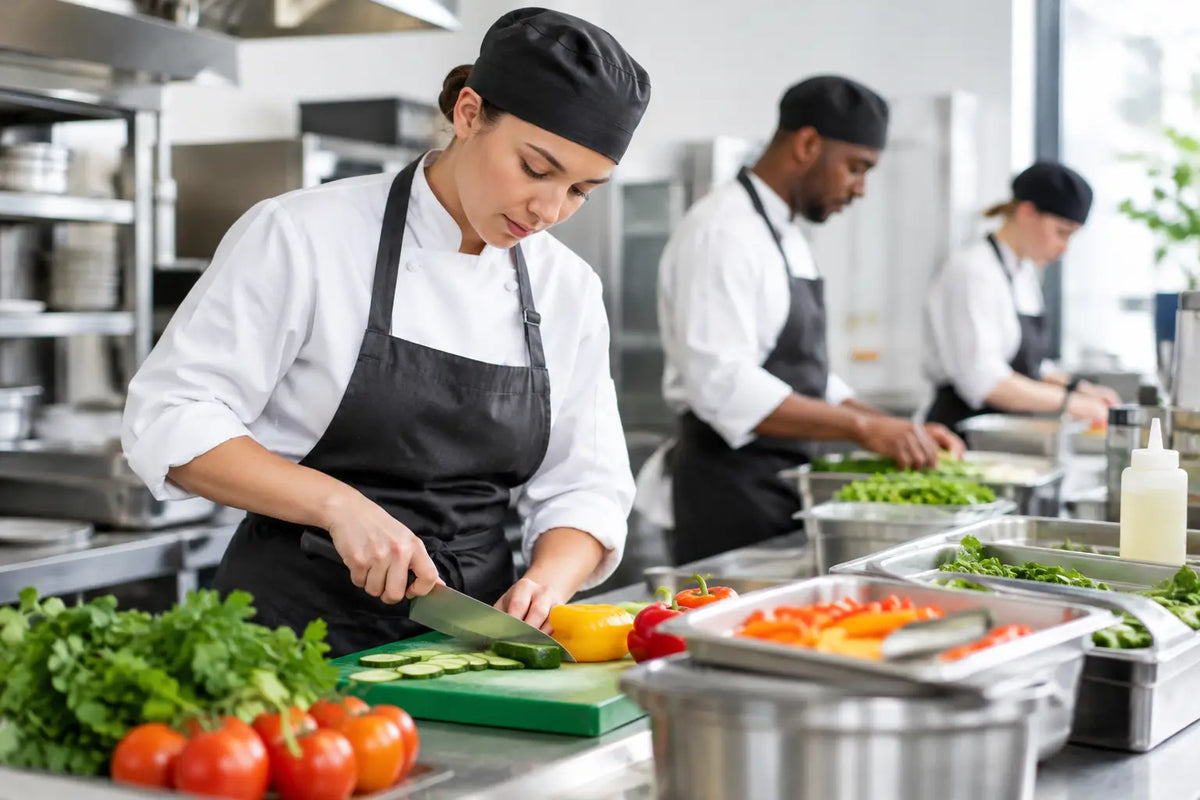
The lunch rush rarely exposes a single bad employee or one slow recipe. It exposes a prep system that cannot keep pace. To reduce prep bottlenecks, operators need to identify where product, labor, equipment, and cold storage stop moving. The fix is usually more practical than adding another person to the schedule: build a prep line around the actual volume you need to produce.
A prep bottleneck can start at the receiving door, at a crowded cutting table, inside an undersized walk-in, or at a single machine everyone needs at once. For meat-heavy restaurants, butcher operations, BBQ kitchens, and caterers, the most common constraints are grinding, slicing, mixing, portioning, chilling, and storing product safely until service. The goal is not to make every station faster. It is to make the slowest repeated step capable of supporting the next one.
Find the Step That Holds Back Production
Start by following one high-volume item from raw delivery to ready-to-cook storage. Time each repeated task over a typical prep shift, including waiting. A cook may spend six minutes slicing meat but wait 15 minutes for access to the slicer. A sausage team may have enough hands for stuffing but not enough chilled product because mixing and holding happen in the same small area.
Look for three signs of a real constraint: employees form a queue, product sits unfinished between steps, or staff create workarounds that hurt consistency. Examples include pre-cutting too far ahead, filling refrigerated pans beyond safe airflow, or using a small countertop mixer for batches that should be handled by a floor mixer.
Do not base decisions only on peak sales. Measure the prep volume required to cover your busiest day plus a reasonable buffer for waste, catering orders, and late deliveries. A piece of equipment that handles an average Tuesday may become the limiting factor every Friday.
Separate Machine Time From Labor Time
A useful distinction is whether the delay comes from the machine or from the operator. If a grinder can process product faster than employees can trim and feed it, adding grinder capacity will not solve the issue. Better trimming tables, knife access, pan staging, and product organization may deliver more value.
If trained employees are waiting for one machine to finish, capacity is the problem. That is where commercial-grade equipment earns its place. Higher output, larger hoppers, stronger motors, and easier cleanup can turn a labor queue into a steady production flow.
Build Prep Stations Around Product Flow
The most productive prep rooms move in one direction: receive, store, trim, process, portion, label, and refrigerate. When raw ingredients travel back and forth across the same tables, workers waste steps and increase the chance of mix-ups.
For a meat-prep operation, place scales, hotel pans, tools, and packaging close to the work being performed. Keep trimming near raw-meat storage, then position grinders, mixers, and stuffers in a sequence that minimizes handling. Finished product should move directly to dedicated refrigerated storage rather than waiting on a cart while someone clears space.
This does not require a major remodel in every kitchen. Often, a better station layout starts with moving one table, adding a mobile ingredient cart, or assigning one reach-in refrigerator to prepared proteins only. The key is that employees should not cross the room repeatedly for basic supplies.
Give Every Station Enough Cold Holding
Refrigeration is often the hidden cause of slow prep. If staff must stop to make room in a crowded cooler, find pans, or shift product around to reach ingredients, the bottleneck is storage capacity and organization.
Use shallow pans and clearly designated shelves for work-in-process items. Keep raw, processed, and ready-to-cook products separated according to your food safety procedures. For high-volume protein programs, adequate refrigeration near the prep area also protects product temperature while workers grind, mix, slice, or portion in batches.
More cold storage is not automatically better. Oversized equipment can take up valuable production space and encourage excessive prep. The right choice depends on turnover, delivery frequency, menu complexity, and the amount of product that must be held safely between prep and service.
Use the Right Equipment to Reduce Prep Bottlenecks
Manual work has a place in professional kitchens, especially for specialty cuts and small, irregular batches. But repeated high-volume tasks need equipment sized for the job. A hand-operated process that takes two people an hour every morning may be the clearest case for mechanization.
For butcher shops, burger programs, sausage production, and BBQ operations, a commercial meat grinder can improve output consistency while reducing the time spent processing trim. A mixer with the correct bowl capacity can combine seasoning and protein evenly without forcing staff to split every batch. A sausage stuffer designed for production volume helps maintain portion control and limits the labor required to fill casings.
Slicers and bone saws can also remove major delays when operators are cutting large quantities of protein to consistent thickness or portion size. The equipment choice should match the product. Frozen meat, fresh boneless cuts, bone-in product, cheese, and vegetables all place different demands on blades, motors, feed systems, and cleaning procedures.
Size for the Busy Window, Not the Catalog Page
Equipment specifications matter because they determine whether a machine fits your operation. Consider throughput, hopper or bowl capacity, footprint, electrical requirements, duty cycle, and how quickly the unit can be disassembled and sanitized. A machine with impressive output on paper can still create delays if it is difficult to clean between products or cannot fit into the available prep area.
Buying the largest unit available is not always the right call. A smaller grinder may be more efficient for a tight menu with limited daily volume, while a higher-capacity model is justified when multiple departments depend on ground product. Similarly, a large mixer can reduce batch count but may be inefficient when recipes require frequent small runs.
Hakka Brothers supplies commercial equipment across meat processing, food prep, refrigeration, and kitchen production, allowing operators to evaluate a workflow as a connected system rather than a collection of unrelated purchases.
Standardize the Work Before Adding Labor
When prep falls behind, adding a person can provide temporary relief. It can also add congestion if the station, equipment, and task sequence are not defined. Before increasing labor, write a simple standard for your highest-volume prep items: batch size, yield target, tools required, pan size, hold location, label requirements, and the point at which the next batch should begin.
Standard batch sizes prevent a common production problem: one employee makes a half batch, another makes an oversized batch, and neither fits the available storage plan. Consistent batches also make it easier to forecast labor and equipment requirements.
Cross-train staff for coverage, but avoid assigning everyone to every task during peak prep periods. Clear ownership keeps one person from interrupting a grinder operator, slicer operator, or baker every few minutes with questions that should have been answered by the station standard.
Protect Capacity With Cleaning and Maintenance
A machine that is out of service during prep is more than a maintenance issue. It can force employees into slower manual methods, delay the entire production schedule, and compromise product consistency. Build cleaning time into the shift instead of treating it as an interruption.
Keep the required brushes, sanitizer supplies, spare blades, food-safe lubricant, and small replacement parts organized near the equipment. Follow manufacturer cleaning instructions and inspect components before a busy production day. Dull slicer blades, worn grinder plates, loose mixer attachments, and overloaded refrigeration units all slow production long before they fail completely.
Preventive maintenance is particularly valuable for equipment that supports multiple menu items. If one slicer handles deli meats, cheeses, and vegetables, schedule cleaning and product changes deliberately. That is safer, faster, and easier to manage than forcing staff to improvise during a rush.
Measure the Improvement That Matters
Once changes are in place, measure output in practical terms: pounds processed per labor hour, batches completed before service, average time between raw product and refrigerated finished product, or the number of times staff wait for a station. Track waste and temperature compliance alongside speed. A faster process that increases trim loss or creates unsafe holding practices is not an improvement.
The best prep system gives your team enough capacity to work steadily, not frantically. Start with the step where product stops moving, correct the layout or equipment issue behind it, and verify the result over several busy shifts. That disciplined approach turns prep from a daily scramble into a controlled production operation.
Keep exploring
All guides ↗
Salad Spinner Not Drying Lettuce? Check Your Batch
Troubleshoot unevenly wet greens with practical loading, drainage and workflow checks, plus a fact-based comparison of Clivia 10 Qt and 20 Qt manual spinners.
Read the guide
Buffet Drink Station Setup: Cups, Clearance and Refills
Plan a buffet drink station around cup clearance, guest flow and refill access, with practical checks for Hakka 3-gallon and 5-gallon dispensers.
Read the guide
Commercial Dishwashing Equipment Guide for Restaurants
This commercial dishwashing equipment guide helps restaurants match machine type, capacity, utilities, and sanitation needs to faster, cleaner service.
Read the guide
Join the conversation