

THE HAKKA JOURNAL
Can Restaurants Use Induction in a Commercial Kitchen?
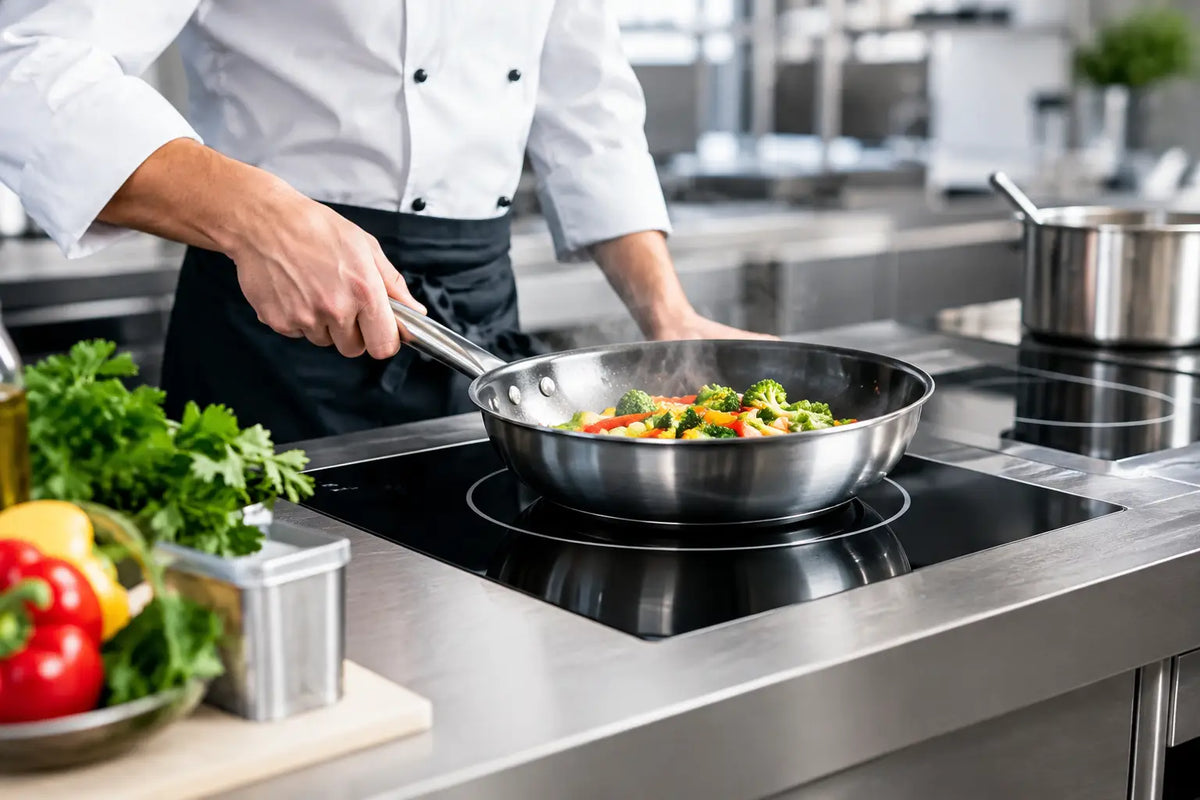
A sauté station can become the hottest and most congested point in a kitchen, especially during a hard dinner push. Can restaurants use induction to reduce that heat, improve control, and keep production moving? Yes, provided the equipment is specified for commercial duty and matched to the menu, cookware, electrical capacity, and line workflow.
Induction is not a direct replacement for every gas appliance. It is a high-performance cooking method with clear advantages in the right stations: sauce work, sautéing, holding, finishing, demonstration cooking, and compact production areas. For many operators, the practical answer is a hybrid line that uses induction where speed and precision matter while retaining gas, charbroilers, fryers, ovens, or woks where open flame and specialized cooking surfaces serve the menu better.
Can Restaurants Use Induction for High-Volume Service?
Commercial induction equipment is built for restaurant production, not occasional home cooking. A properly rated countertop induction range or drop-in induction unit can bring a compatible pan to temperature quickly, recover heat efficiently, and offer repeatable power settings through a busy service period. Because the energy is directed into the cookware rather than the surrounding air, the cooking zone stays comparatively cooler.
That cooler working environment has real operational value. The line can be more comfortable for cooks, air conditioning systems are not working as hard against appliance heat, and spills are less likely to bake onto a hot burner surface. When the pan is removed, most induction units stop transferring heat immediately. That can reduce wasted energy during intermittent cooking tasks and adds a useful layer of safety at crowded stations.
Speed alone should not determine the decision. A restaurant with continuous high-BTU wok cooking, large stockpot production, flame-charred menu items, or heavy cast-iron work may still need gas equipment designed specifically for those applications. Induction excels when heat control is a priority, but it cannot create an open flame, direct radiant char, or the same visual and flavor effects as a charbroiler.
How Commercial Induction Cooking Works
An induction coil beneath a ceramic-glass top creates a magnetic field. When ferromagnetic cookware sits on that field, the pan itself generates heat. The unit is not heating a burner and then waiting for that burner to heat the pan. That difference is why induction responds quickly when a cook raises or lowers the power setting.
For restaurant operators, the result is precise response during delicate work. A chef can hold a sauce at a controlled simmer, move quickly from a high sear to a lower finish, or maintain a stable cooking temperature for small-batch production. Digital controls, timers, and programmed settings can also help standardize repetitive menu tasks across shifts.
However, actual performance depends on more than the nameplate wattage. Pan construction, pan diameter, cookware contact with the glass, incoming voltage, ambient conditions, and the appliance's duty rating all affect results. A low-cost consumer unit is not a substitute for commercial induction equipment operating through lunch and dinner service. Restaurant equipment needs a durable housing, proper internal cooling, controls designed for frequent use, and the safety certifications required by local authorities or the facility.
Cookware Compatibility Is a Real Requirement
Induction requires magnetic cookware. Cast iron and many stainless steel pans work well, but not every stainless pan is magnetic. Aluminum, copper, glass, and ceramic cookware generally will not work unless they have a bonded magnetic base.
Before changing a station, test the existing cookware with a magnet. If it sticks firmly to the bottom, the pan is generally induction-compatible. This is a quick first check, not a complete purchasing specification. A pan with a warped bottom, a base that is too small for the cooking zone, or thin construction can still perform poorly. Flat, heavy-gauge pans with a broad magnetic base offer better contact, more even heating, and more reliable results.
Pan size matters as well. A small pan placed on a large induction zone may not receive heat where the cook expects it, while an oversized vessel can limit efficiency and trigger pan-detection issues. Match the unit's recommended pan diameter and weight capacity to the vessels used at that station.
Electrical Planning Comes Before the Purchase Order
Gas replacements can create an electrical surprise. Commercial induction units may require 208V or 240V service, dedicated circuits, and substantial amperage depending on the number of hobs and total wattage. A multi-zone induction range can place a meaningful load on a kitchen's electrical panel, particularly in a facility already operating refrigeration, combi ovens, dish machines, HVAC equipment, and prep machinery.
Have a qualified electrician review the specification sheet before equipment is ordered. Confirm voltage, phase, plug or hardwire requirements, breaker size, cord configuration, and available panel capacity. Do not assume an existing receptacle is sufficient simply because it is located near the line.
This planning step matters most in retrofits. A new restaurant can design electrical service around the intended cooking battery. An older operation may need panel upgrades, new conduit runs, or a different equipment mix to support induction safely. Those installation costs can change the payback calculation, so they belong in the budget from the start.
Where Induction Fits Best on the Line
Induction is particularly useful when a restaurant needs flexible cooking capacity without adding another permanent gas connection. A countertop unit can support a banquet station, catering prep, a pop-up menu, or an overflow sauté position. Drop-in models can create a clean chef's counter or exhibition cooking surface with less visible equipment clutter.
For the main line, induction commonly performs well for sauces, pasta finishing, sauté pans, braising, stock and soup reheating, chocolate work, and precise holding. It is also a practical option in limited-space kitchens where reducing radiant heat is a major concern.
The less suitable applications are just as important. Traditional wok cooking may require induction wok units with a shaped cooking bowl rather than a flat-top model. Large-volume stock production requires an induction unit rated for the vessel size and weight. Charbroiling, flame finishing, and high-output frying require purpose-built equipment, not a workaround on a portable induction burner.
A restaurant should also verify ventilation and local code requirements with its authority having jurisdiction. Induction produces less ambient heat and no combustion byproducts at the cooktop, but ventilation rules are based on the appliance, the cooking process, grease production, and local code. A lower-heat appliance does not automatically eliminate hood requirements.
Comparing Operating Costs and Maintenance
Induction can use less energy at the pan because it transfers heat efficiently and avoids much of the standby loss associated with an open flame. That may improve operating costs, particularly at stations with frequent starts, stops, and low-to-medium heat work. The exact savings depend on local utility rates, menu volume, operating hours, and how the equipment is used.
Maintenance is generally straightforward, but not optional. The smooth top should be cleaned after service using products approved for ceramic glass. Cooks should avoid dragging rough cookware across the surface, dropping heavy pans, or allowing foil and unsuitable materials to contact the cooking zone. Air intake and exhaust areas must remain clear so internal fans can cool the electronics.
Unlike gas equipment, induction units contain electronic components that require trained service if a control board, fan, sensor, or power module fails. This makes commercial build quality, available parts, and warranty support central buying considerations. A cheaper unit with limited service support can create more downtime than it saves upfront.
A Practical Way to Add Induction
Start with one task that exposes a clear operational problem: an overheated sauté station, inconsistent sauce holding, limited catering capacity, or a cramped chef's counter. Select a commercial unit sized for that task, verify cookware compatibility, and document the electrical requirements before installation.
Then train the line. Cooks need to understand that induction reacts faster than gas, and they should use the appropriate pans and power settings. A short test period can reveal whether a station needs different cookware, a higher-output unit, or a hybrid setup with both induction and traditional cooking equipment.
For professional kitchens, induction works best as a deliberate production tool, not a trend-driven purchase. Match it to the food, the crew, and the facility, and it can deliver controlled heat exactly where the operation needs it most.
Keep exploring
All guides ↗
Choosing the Right Smoker Oven for Restaurants
Choose a smoker oven for restaurants with the capacity, temperature control, recovery time, and build quality needed for consistent commercial service.
Read the guide
Pizza Peel Size: Check the Head, Reach and Workspace
Choose a pizza peel by checking the working head, assembled reach, and station space. Review two Clivia detachable-handle options and a practical buying checklist.
Read the guide
Best Equipment for Burger Kitchens That Perform
Choose the best equipment for burger kitchens with practical guidance on griddles, refrigeration, prep, frying, holding, and workflow capacity planning.
Read the guide
Join the conversation