

THE HAKKA JOURNAL
What Is a Dough Sheeter for Commercial Bakeries?
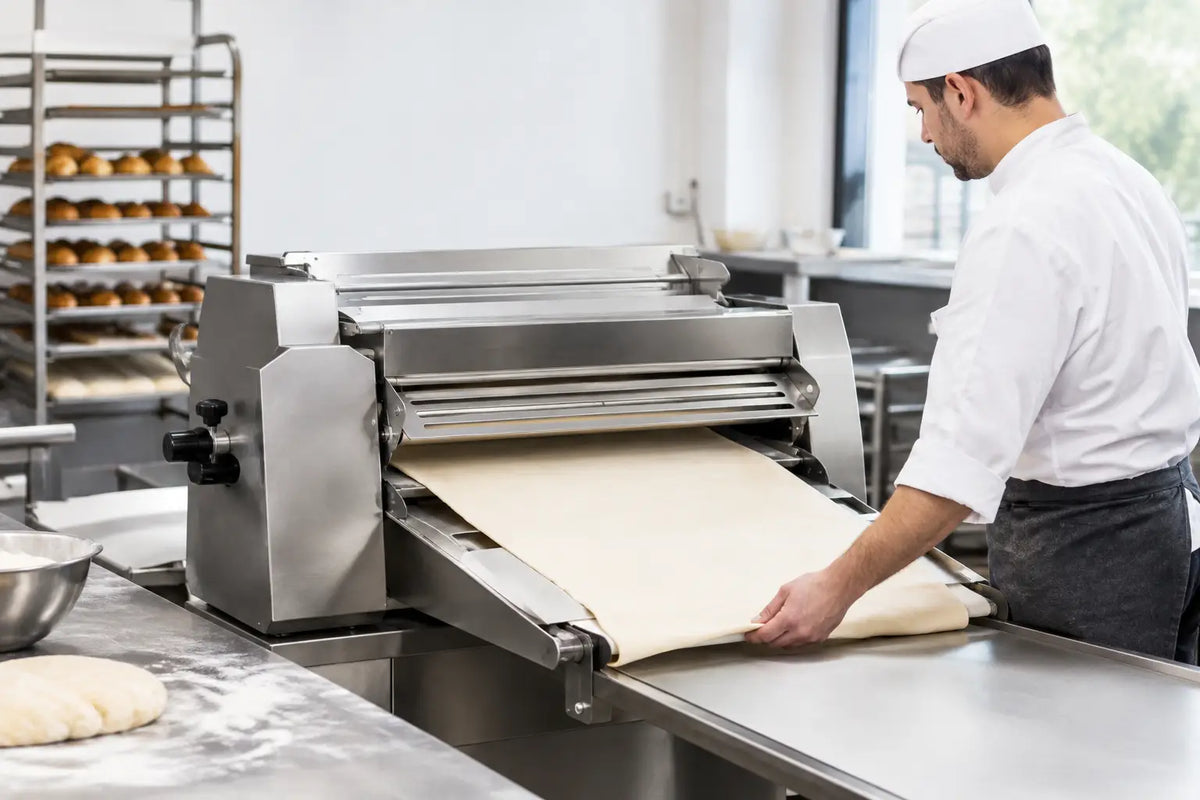
A batch of croissant dough can lose value long before it reaches the oven. If the thickness varies from one end of the sheet to the other, butter layers bake unevenly, portions drift, and staff spend valuable prep time correcting work by hand. So, what is a dough sheeter? It is a commercial machine that rolls dough into controlled, even sheets at a selected thickness, giving bakeries and foodservice operations faster production and more consistent results.
For operations producing laminated pastries, pie dough, pizza crusts, tortillas, fondant, cookies, or pasta, a dough sheeter can replace repetitive rolling-pin work with a repeatable process. It does not make every dough task automatic, and it does not eliminate the need for skilled handling. It does, however, give the production team a dependable way to control one of the most important variables in baking: dough thickness.
What Is a Dough Sheeter and How Does It Work?
A dough sheeter uses a pair of adjustable rollers to compress a piece of dough as it passes through the machine. The gap between the rollers determines the finished thickness. Operators typically start with a wider setting, then make several passes while gradually reducing the roller gap until the dough reaches the required dimension.
Most commercial units use conveyor belts to carry the dough into and out of the rollers. On a countertop or compact model, the operator may guide the dough through shorter belts. Floor-standing reversible sheeters use longer conveyor tables and can move dough in either direction, allowing the operator to run repeated passes without lifting and turning a large sheet by hand.
The result is a flatter, more uniform dough sheet with less strain on the operator. Consistency is the primary benefit. When dough is rolled to a repeatable thickness, portion cutting, proofing, baking time, and finished-product appearance become easier to standardize.
A sheeter is different from a dough mixer, which develops gluten and combines ingredients, and from a dough divider, which portions dough by weight or volume. These machines can work in the same production line, but each handles a different stage of prep.
Why Thickness Control Matters in Bakery Production
In a small operation, hand rolling can be practical for limited batches or specialty products. As production increases, it becomes difficult to maintain the same thickness across every sheet, especially during a busy prep shift. A dough sheeter reduces that variability.
For laminated dough, even thickness supports even butter distribution and clean layers. Croissants, Danish pastries, puff pastry, and similar products depend on controlled rolling to create proper lift and texture. Excess pressure can break or smear butter layers, while uneven rolling creates inconsistent expansion in the oven.
For pie crusts, tart shells, crackers, and cookie dough, consistent sheets improve yield. A dough sheet that is too thick uses more product than planned; one that is too thin may tear, overbake, or fail to hold filling. Controlled sheeting helps operators cut portions with less scrap and more predictable costs.
Pizza operations can also benefit when producing dough for trays, pans, or certain crust styles. A sheeter can speed up the initial flattening process, although hand stretching may still be preferred when a product depends on a pronounced rim or an irregular artisan shape. The right method depends on the menu standard, not just production volume.
Common Dough Sheeter Types
The best machine format depends on available space, dough type, batch size, and how often the equipment will run. The two primary commercial categories are countertop sheeters and floor-model reversible sheeters.
Countertop dough sheeters
Countertop units are designed for smaller footprints and lower-volume production. They are often a practical fit for cafes, pizzerias, restaurants, pastry stations, and compact bakeries that need more consistency than hand rolling can provide but do not require long conveyor tables.
These machines generally handle smaller dough pieces and shorter sheets. They can be useful for pizza dough, pasta, fondant, cookie dough, and small pastry batches. Their compact design makes them easier to place in crowded kitchens, but their capacity and sheet length will not match a full-size bakery sheeter.
Floor-standing reversible sheeters
A reversible sheeter is built for higher-volume bakery production. It has conveyor belts on both sides of the roller assembly, allowing dough to travel back and forth through the rollers. Operators can reduce thickness progressively without repeatedly picking up a broad, delicate sheet of dough.
This design is particularly useful for puff pastry, croissants, Danish dough, pie dough, and other products that require multiple controlled passes. Floor models require more clearance, and some feature folding conveyor tables to reduce their footprint when not in use. Before purchasing, measure not only the stored machine dimensions but also the full working length when tables are extended.
What Products Can You Make With a Dough Sheeter?
A commercial dough sheeter is not limited to one category of baked goods. Its value comes from preparing dough that benefits from controlled thickness. Common applications include laminated pastry, pie crust, tart dough, pizza dough, tortillas, pasta sheets, fondant, cookie dough, crackers, and flatbreads.
Not every dough behaves the same way in the rollers. High-hydration doughs can stick to belts or rollers if they are too warm or insufficiently dusted. Very cold dough can crack. Dough with large inclusions, such as nuts, fruit, or chocolate chunks, may be damaged or produce uneven sheets. Operations should test their actual formulas rather than assuming any dough will run well at the same settings.
Temperature management matters most with laminated products. The dough and butter need to remain pliable but cool enough to stay in separate layers. A sheeter provides controlled compression, but it cannot correct dough that is overproofed, too warm, under-rested, or improperly mixed.
How to Choose the Right Commercial Dough Sheeter
Start with the products you make most often and the sheet size they require. Roller width determines the maximum practical dough width, while conveyor length affects how easily the machine handles larger sheets and repeated passes. A unit that is too narrow forces staff to work in smaller pieces, adding labor and creating more seams or variation.
Next, consider production volume. A countertop machine may be sufficient for a restaurant making moderate quantities of pizza dough or pastry. A bakery producing daily laminated dough should look at a reversible floor model designed for extended running and larger batches. Buying too small can create a new bottleneck; buying too large can consume valuable floor space and capital without improving the actual workflow.
Pay close attention to thickness adjustment. A clear, repeatable adjustment system helps staff move from a rough initial pass to the final specification with fewer errors. For operations with multiple employees, settings that are easy to read and reproduce are especially useful.
Construction and cleaning access should also influence the decision. Food-contact surfaces, belts, scrapers, guards, and roller areas need routine cleaning. Choose a commercial unit with durable materials and access points that support the sanitation procedures your team can realistically maintain. Equipment that is difficult to clean tends to lose performance and create avoidable downtime.
Electrical requirements are another practical checkpoint. Confirm voltage, plug type, amperage, and available circuits before installation. Floor models may also require careful planning for doorways, worktable placement, maneuvering space, and safe operator clearance.
Operating Practices That Protect Product Quality
A dough sheeter delivers its best results when operators follow a consistent process. Begin with rested dough at the proper temperature. Use only enough flour or release material to prevent sticking, because excessive dusting can dry the dough and affect the finished product.
Start with a wide roller opening and reduce the thickness in stages. Trying to force a thick piece through a narrow gap can tear dough, strain the machine, and compromise laminated layers. For delicate dough, allow brief rest periods between passes when the formula requires it.
Keep belts, rollers, and scrapers clean during production. Dough buildup can create marks, sticking, and uneven feeding. Staff should never reach into moving rollers or bypass guards. Shut off and disconnect the machine before cleaning, adjustment, or maintenance beyond normal external operation.
Is a Dough Sheeter Worth It?
A dough sheeter is worth considering when hand rolling is limiting output, producing inconsistent portions, or consuming labor that should be focused on finishing, baking, and service. It is most valuable when the menu includes products where thickness directly affects quality and yield.
The investment is less compelling for a business that only rolls a few small batches each week or produces rustic items where variation is part of the product standard. Even then, operators should account for staff fatigue and the cost of inconsistent results, not only the number of dough batches produced.
For professional bakeries, restaurants, and pastry programs, the right sheeter becomes a control point in the prep process. Match roller width, conveyor length, electrical needs, and capacity to the products your team makes every day, then build a repeatable rolling procedure around it. That is how a dough sheeter earns its space in a commercial kitchen.
Keep exploring
All guides ↗
How to Reduce Prep Bottlenecks in Busy Kitchens
Reduce prep bottlenecks with workflow design, right-sized equipment, cold storage, and station planning that keep commercial kitchens producing daily.
Read the guide
Salad Spinner Not Drying Lettuce? Check Your Batch
Troubleshoot unevenly wet greens with practical loading, drainage and workflow checks, plus a fact-based comparison of Clivia 10 Qt and 20 Qt manual spinners.
Read the guide
Buffet Drink Station Setup: Cups, Clearance and Refills
Plan a buffet drink station around cup clearance, guest flow and refill access, with practical checks for Hakka 3-gallon and 5-gallon dispensers.
Read the guide
Join the conversation