

THE HAKKA JOURNAL
How to Transport Hot Food for Catering Jobs
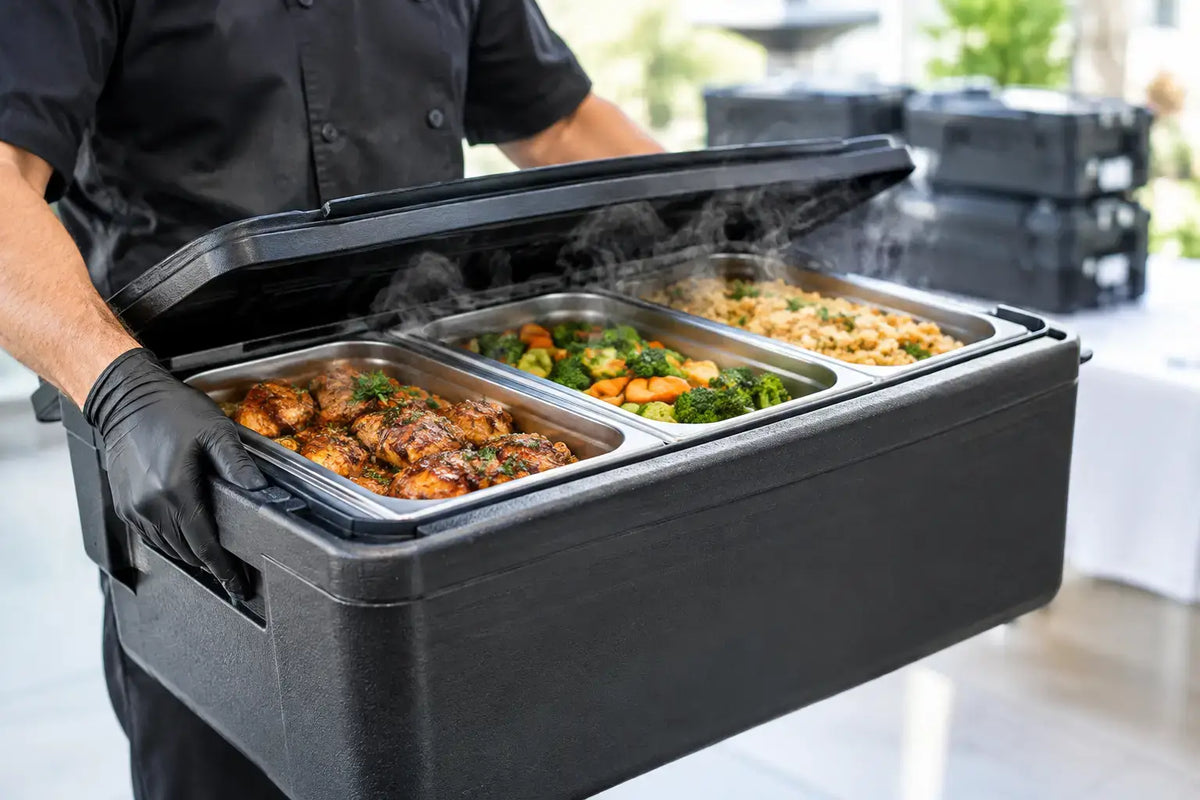
A pan of chicken can leave the kitchen at 180°F and arrive lukewarm if the delivery setup is wrong. Learning how to transport hot food is not just about choosing an insulated box. It is a controlled process that starts at the cooking line and ends when the last serving pan is placed on the buffet or passed to the customer.
For caterers, BBQ operators, restaurants, bakeries, and mobile food businesses, hot-food transport protects food quality, reduces waste, and keeps service on schedule. The goal is simple: keep food above the required hot-holding temperature, prevent spills and moisture damage, and make unloading fast enough that the food does not sit unattended in a vehicle.
Start With the Right Hot-Holding Target
Most commercial foodservice operations use 135°F as the minimum hot-holding temperature for cooked TCS food, unless local health code requires a different standard. TCS means food that needs time and temperature control for safety, including cooked meat, poultry, seafood, rice, beans, cooked vegetables, sauces, and dairy-based dishes.
The practical target for loading is usually higher than the minimum. Food that enters a carrier at 150°F to 165°F has more temperature buffer during staging, loading, driving, and setup. This does not mean overheating food without regard for quality. Delicate products can dry out, sauces can break, and fried food can lose its texture. The correct loading temperature depends on the menu, travel time, carrier performance, and the temperature of the destination holding equipment.
Take and record temperatures at the center of the product, not just on the pan surface. Use a calibrated probe thermometer and check the thickest portion of a roast, the center of a deep hotel pan, or the densest area of a casserole. A surface reading can look acceptable while the interior has already cooled.
How to Transport Hot Food With Insulated Carriers
An insulated food carrier is the foundation of hot-food delivery. Commercial carriers with thick foam insulation, tight-fitting doors or lids, and durable latches reduce heat loss far better than coolers, cardboard boxes, or improvised containers. For frequent transport, choose equipment designed around the pan sizes and volumes your operation actually uses.
Front-loading insulated carriers work well for full-size hotel pans, sheet pans, and plated meal components because staff can load and remove pans on rails. Top-loading carriers are useful for deep pans, soup containers, or stacked food vessels. Both styles can perform well when the doors stay closed and the load is organized correctly.
Capacity matters, but a larger carrier is not automatically the better choice. A nearly empty oversized cabinet contains more air space, which cools faster each time the door opens. Use carrier sizes that match the job. For high-volume catering, several manageable carriers often provide better temperature control and easier handling than one overloaded unit.
Some operations use heated holding cabinets or electric hot boxes for longer routes, cold weather deliveries, or extended on-site service. These units add active heat, but they require access to power and careful planning around electrical capacity. Passive insulated carriers are simpler for short routes, while powered equipment gives more control when the delivery timeline is less predictable.
Load Food Fast, Hot, and in the Right Order
A carrier cannot restore heat that food has already lost on a prep table. Finish cooking, verify temperature, cover the pan, and move it directly into the preheated or preconditioned carrier. If your carrier manufacturer allows it, warming the empty carrier before loading can reduce the initial heat loss from hot pans.
Keep pans covered with fitted lids, foil, or food-safe wrap appropriate for the product. Covers retain heat, prevent contamination, and reduce spills. They also limit moisture loss in braises, mashed potatoes, rice, and smoked meats. For fried foods, avoid sealing them so tightly that steam destroys the crust. Venting may preserve texture, but it increases heat loss, so that trade-off works best on short runs.
Load the hottest and heaviest items first, then place products needed last at the event near the door. This minimizes handling and reduces the number of times staff must search through the carrier. Keep liquid-heavy pans level and avoid stacking items that can crush garnishes, pastries, or delicate finishes.
A reliable loading sequence should include these controls:
- Confirm each pan is at the required holding temperature before it leaves the kitchen.
- Cover, label, and identify every pan by event, menu item, and service order.
- Secure pans in the carrier so they cannot slide during turns or hard braking.
- Close and latch the carrier immediately after loading.
- Record departure time, product temperatures, and the staff member responsible for delivery.
Control the Vehicle, Not Just the Food Carrier
The delivery vehicle is part of the hot-holding system. Load carriers onto a level, clean, non-slip surface and secure them with straps, cargo bars, or other restraints suitable for the vehicle. A tipped hotel pan is more than a cleanup issue. It can contaminate other food, damage packaging, delay service, and create burn hazards.
Do not place hot carriers directly beside open windows, exterior doors, or air-conditioning vents. In cold weather, protect the load from freezing exterior air during loading and unloading. In hot weather, avoid leaving carriers in direct sun, where exterior heat can affect product quality and create an uncomfortable unloading environment.
Plan the route before food leaves the kitchen. The shortest route is not always the best route if it includes difficult parking, long walks, elevator delays, or venue access restrictions. Confirm the receiving entrance, loading dock procedure, elevator availability, and where hot holding will be set up. Ten minutes spent clarifying access can prevent thirty minutes of food sitting in a hallway.
For larger jobs, assign one person to drive and another to manage the food. The food lead can verify temperatures, direct unloading, and identify the first pans needed for service. This prevents a driver from trying to park, carry hot food, and solve event questions at the same time.
Verify Temperature at Arrival and During Service
Check temperatures when the food reaches the destination, especially after trips longer than a few minutes. If a pan is at or above your required hot-holding temperature, transfer it promptly to chafers, steam tables, heated cabinets, or another approved hot-holding system. Insulated carriers are built for transport and short-term holding, but they should not replace a proper service setup for an all-day event.
Keep chafing dishes and steam tables ready before opening the carriers. Chafers need hot water and fuel or electric heat established in advance. Steam tables should be preheated. Moving food into cold serving equipment creates a rapid temperature drop precisely when the meal should be ready to serve.
Monitor food throughout the event. A pan may arrive hot but cool too quickly if the lid stays open, the burner runs low, or the service area is exposed to wind. Stir thick foods periodically to distribute heat, rotate backup pans from the carrier as needed, and use clean utensils for each menu item.
If food drops below your operational limit, follow your documented food safety procedure and local regulations. Do not rely on a quick visual check or assume that a pan is safe because it still feels warm. A thermometer provides the answer.
Match the Transport Method to the Menu
Not every hot menu travels the same way. Braised meats, chili, pulled pork, soups, sauces, macaroni and cheese, and rice generally hold well in covered hotel pans. Their moisture content and density help retain heat. Carved meats can stay hot effectively when held whole, then sliced closer to service.
Crisp products require more planning. Fried chicken, fries, roasted vegetables, and crackling-skinned pork can lose texture in a sealed humid environment. For these items, consider transporting components separately, using vented packaging for short trips, or finishing the product on site. The best food safety result is not always the best eating result, so the production plan must account for both.
For BBQ and meat-focused catering, hold proteins in covered pans with their juices or wrap them appropriately after resting. Avoid loading hot meats too early while they are still releasing large amounts of steam. That steam can soften bark, dilute sauces, and create excess condensation. A short, controlled rest before packing often improves both quality and transport performance.
Build a Repeatable Delivery Standard
The strongest catering operations do not depend on one experienced employee remembering every detail. They use a repeatable system: designated carriers, calibrated thermometers, labeled pans, temperature logs, vehicle restraints, and a clear handoff at the venue.
Commercial-grade carriers and holding equipment are an operational investment because they reduce the variables that cause late, cold, or damaged orders. Hakka Brothers supports professional foodservice teams with equipment built for demanding kitchen and transport workflows, where dependable construction and practical capacity matter.
Treat every delivery as an extension of your kitchen line. When food is packed hot, secured correctly, checked on arrival, and transferred immediately into proper service equipment, guests receive the meal your team intended to serve.
Keep exploring
All guides ↗
Café Oven Batch Planning: Keep Breakfast Service Moving
Build a practical café breakfast baking schedule around menu programs, pan capacity, replenishment and the handoff from oven to service.
Read the guide
Fixed vs Tilting Meat Mixer: Which Setup Fits Your Prep?
Compare Hakka FME20, FME20T and FME10B meat mixers by tank design, manual or electric drive, batch rating and unloading workflow.
Read the guide
Burger Press Size: Patty Diameter vs Portion Weight
Understand burger press diameter, portion weight, and bun fit. Compare Hakka fixed-size and interchangeable models with a practical menu specification checklist.
Read the guide
Join the conversation