

THE HAKKA JOURNAL
Deck Oven Comparison for Commercial Kitchens
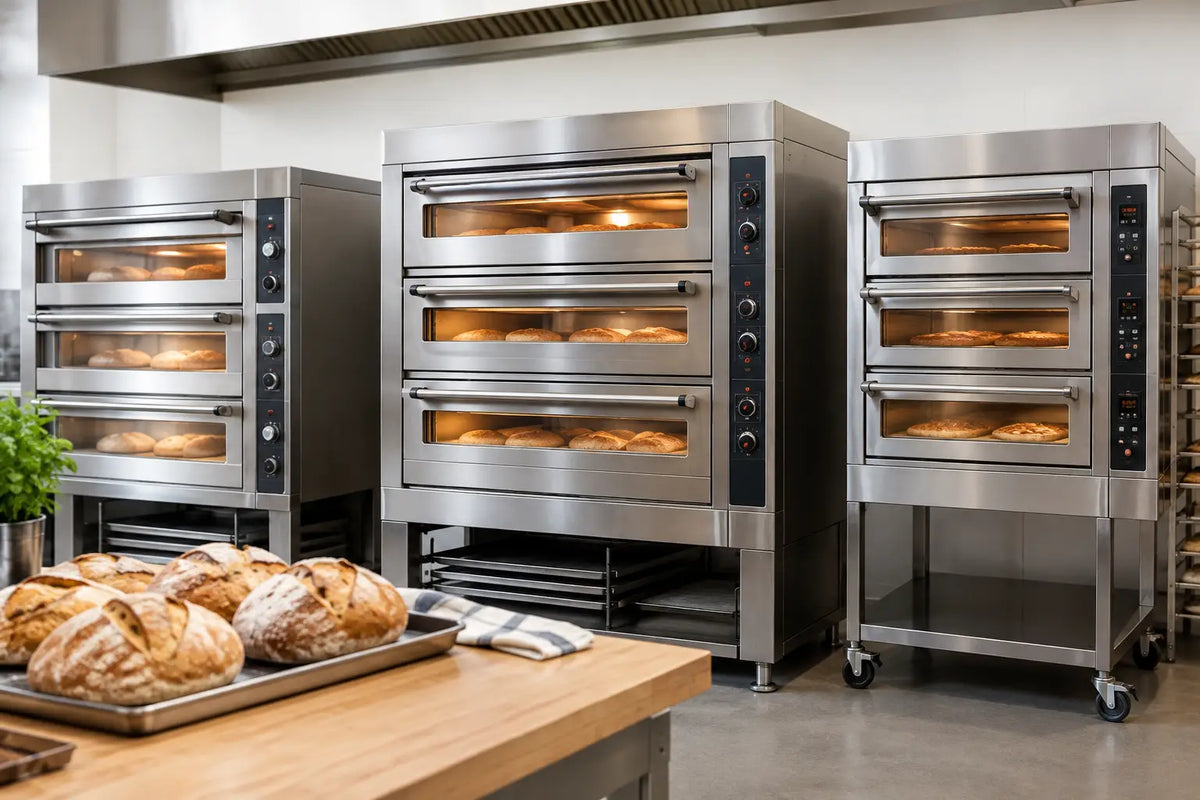
A deck oven is not a general-purpose replacement for every commercial oven. It is a production tool built for operators who need direct bottom heat, retained chamber heat, and repeatable results from pizzas, breads, pastries, roasted items, and baked entrées. This deck oven comparison focuses on the specifications that affect service speed, product quality, labor, and installation cost.
For a pizzeria, the wrong deck configuration can limit peak-hour ticket capacity. For a bakery, uneven deck heat can create inconsistent crust color and bake times. For restaurants with a mixed menu, buying more oven than the operation can support may tie up valuable floor space and utility capacity. The best choice starts with the food you produce, how much you produce, and when demand peaks.
Deck Oven Comparison: What Changes Performance
Deck ovens use one or more independently heated chambers, often called decks. Products bake directly on a stone, ceramic, or metal deck surface, or on pans placed inside the chamber. Compared with convection ovens, deck ovens generally provide stronger bottom heat and less forced airflow. That difference matters when crust development, oven spring, cheese melt, or moisture retention is part of the finished product.
A commercial deck oven comparison should begin with four operating factors: deck count, chamber dimensions, heat source, and control precision. These specifications work together. A large chamber is useful only if it supports your pan size or pizza diameter. Two decks can increase output, but only if staff can load, rotate, and unload product without slowing the line. More power can improve recovery, but it also raises electrical or gas requirements.
Single-Deck vs. Double-Deck vs. Multi-Deck Ovens
A single-deck oven is often a practical fit for low-volume restaurants, caterers, sandwich shops, and bakeries adding a specialty bake station. It requires less floor space and usually has a lower purchase and installation cost. Its limitation is obvious during rush periods: one chamber can become a bottleneck when pizzas, flatbreads, and baked dishes all need the same oven.
A double-deck oven gives operators two separate baking zones. This is useful when products need different temperatures or when one deck must remain available for high-priority production. A pizza operation may run one deck hotter for thin-crust pies and use the second deck for thicker pizzas, calzones, or finishing work. Bakery teams can separate bread production from pastry work.
Multi-deck configurations make sense when volume is consistent enough to justify the footprint, utilities, and labor. They are common in high-output pizzerias, bake shops, commissaries, and institutions. More decks do not automatically mean better efficiency. If daily volume is modest, unused decks still consume space and add cleaning and maintenance responsibility.
Chamber Size and Usable Capacity
Exterior dimensions tell you whether an oven fits through the door. Interior deck dimensions tell you whether it fits your production plan. Measure the largest item you intend to bake, including the pan, peel clearance, and the space needed for safe loading. A chamber that holds four pizzas on paper may not hold four comfortably if staff cannot turn or retrieve them quickly.
For pizza, calculate capacity based on the actual finished diameter and the spacing needed for proper heat circulation and handling. For bakery production, calculate by sheet pan size, loaf pan count, or hearth-baked loaf layout. For restaurant work, consider hotel pans, cast iron cookware, casseroles, and finishing plates.
Do not select capacity based only on the busiest 15 minutes of the week. Instead, estimate the number of products needed during a realistic peak hour, then allow operating margin for delayed tickets, remakes, and recovery between loads. An oven sized too tightly forces staff to stack production into batches, which can slow service and reduce consistency.
Gas vs. Electric Deck Ovens
Gas and electric deck ovens can both deliver commercial results, but they create different purchasing and operating conditions.
Gas deck ovens are often chosen by high-volume operators seeking strong heat output and rapid recovery. They can be a good fit for pizzerias and restaurants where gas infrastructure is already available. Before purchasing, verify gas type, BTU rating, ventilation requirements, clearances, and local code compliance. Installation cost can change significantly when a new gas line or hood modification is required.
Electric deck ovens offer precise controls and can simplify installation in locations without gas service. They are common in bakeries, cafés, schools, and foodservice operations that value repeatable setpoints across multiple shifts. Electric models may also be more practical where indoor combustion restrictions apply. However, their electrical demand can be substantial, particularly with stacked units, so confirm voltage, phase, amperage, and panel capacity before ordering.
The better fuel type depends less on preference than on the building and menu. A gas oven may be the practical production choice in an established pizzeria. An electric unit may offer better control and lower installation complexity for a bakery operating in a leased retail space.
Temperature Range, Recovery, and Independent Controls
Temperature range should match the food, not marketing claims. High-heat pizza programs need an oven capable of maintaining the temperatures required for the desired crust and bake time. Bread and pastry production may require a broader but more moderate operating range. Restaurants using a deck oven for finishing entrées need stable heat and enough recovery to handle frequent door openings.
Recovery rate is the ability to return to the set temperature after a cold load enters the chamber. It is one of the most important specifications for a busy operation. A lightly loaded oven may appear to perform well during testing, then struggle when multiple pizzas or sheet pans enter during a rush. Higher wattage or BTU input can support recovery, but insulation, deck material, chamber design, and loading practices also affect real-world performance.
Independent top and bottom heat control is especially valuable for pizza and bread. It allows the operator to correct the balance between crust color and topping finish. If the bottom browns too fast, bottom heat can be reduced. If cheese or toppings need more finish, top heat can be increased. Separate deck controls also help when baking different products at the same time.
Deck Material and Product Results
Deck material affects heat transfer, moisture behavior, and cleaning requirements. Stone or ceramic decks are popular for pizza and hearth breads because they absorb and release heat gradually. This supports crisp bottoms and can help create the dry, well-developed crust many operators want. These decks generally need careful handling and a proper preheat period.
Metal decks transfer heat more directly and may better suit pan pizzas, casseroles, and general baking applications. They can be easier to clean, but they do not always produce the same hearth-style bottom texture. Some operations use screens, pans, or baking stones to adapt the oven to different menu items.
There is no universal best deck surface. A New York-style pizza program, a bread bakery, and a restaurant finishing pan-based dishes will often need different heat-transfer characteristics. Test with your actual dough, pan type, portion size, and target bake time whenever possible.
Installation, Workflow, and Service Access
A deck oven purchase is also an installation decision. Confirm the oven’s exterior dimensions, weight, doorway clearance, floor load capacity, required clearances, ventilation needs, and utility connections. Stacked units may require careful planning for assembly and positioning. The finished installation must leave enough access for cleaning, service, and safe staff movement.
Workflow matters just as much. Place the oven where dough, prepared toppings, peels, pans, and finished-product landing space are within reach. A pizza oven positioned far from the make line adds unnecessary steps to every ticket. A bakery deck oven without nearby racks creates handling delays and increases the chance of product damage.
For growing operations, consider whether the chosen model can support a second unit, additional deck, or expanded production line later. Hakka Brothers helps professional kitchens evaluate commercial equipment around practical capacity, utility needs, and day-to-day production demands rather than consumer-style features.
How to Make the Final Selection
Choose a deck oven by working backward from the product and the rush. Start with the target bake temperature, desired bake time, product dimensions, and peak-hour quantity. Then compare usable chamber area, deck count, heat controls, recovery capability, utility requirements, and installation conditions.
A smaller, well-matched oven with reliable controls can outperform an oversized unit that is difficult to load, expensive to operate, or poorly positioned in the kitchen. The right deck oven should give your team consistent results when the order rail is full, not just impressive specifications on a sheet. Before placing an order, confirm every critical measurement and utility detail, then select the configuration that protects production on your busiest shift.
Keep exploring
All guides ↗
How to Reduce Prep Bottlenecks in Busy Kitchens
Reduce prep bottlenecks with workflow design, right-sized equipment, cold storage, and station planning that keep commercial kitchens producing daily.
Read the guide
Salad Spinner Not Drying Lettuce? Check Your Batch
Troubleshoot unevenly wet greens with practical loading, drainage and workflow checks, plus a fact-based comparison of Clivia 10 Qt and 20 Qt manual spinners.
Read the guide
Buffet Drink Station Setup: Cups, Clearance and Refills
Plan a buffet drink station around cup clearance, guest flow and refill access, with practical checks for Hakka 3-gallon and 5-gallon dispensers.
Read the guide
Join the conversation