

THE HAKKA JOURNAL
Commercial Ventilation Hoods That Fit Your Kitchen
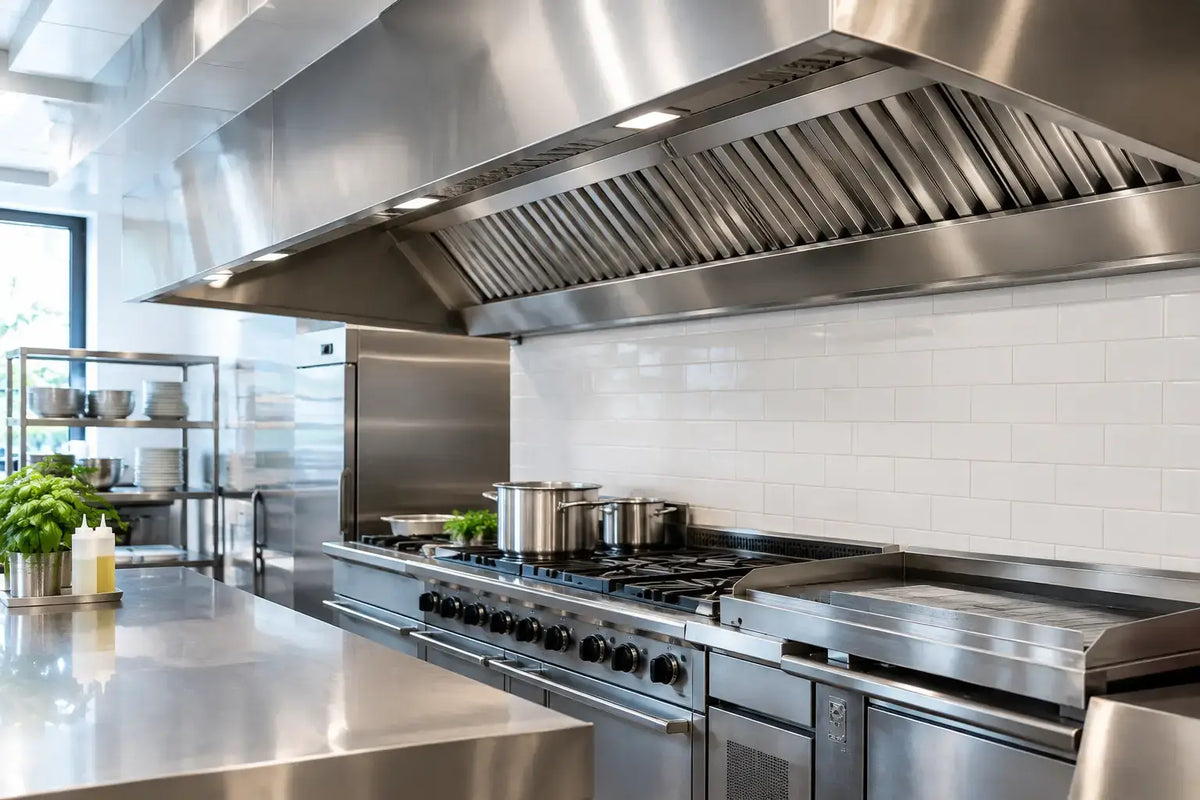
A charbroiler that fills the cook line with smoke is not a cooking problem alone. It is an airflow, capture, and safety problem. Commercial ventilation hoods remove heat, grease-laden vapor, smoke, and odors before they spread through the kitchen, affect staff comfort, or create a fire risk. For restaurants, butcher shops, BBQ operations, bakeries, and high-output prep facilities, the hood system must match the equipment underneath it.
The right choice is rarely the biggest hood or the highest airflow number. It is the system that captures the actual cooking plume, works with the building's makeup air, meets local code requirements, and remains practical to clean and maintain during daily operations.
Start With the Cooking Equipment
Ventilation planning should begin with the appliances that create heat, grease, smoke, or steam. A countertop fryer, heavy-duty gas range, flat-top griddle, charbroiler, conveyor oven, smoker, or wok range can each demand a different level of exhaust performance.
Grease-producing equipment generally requires a Type I hood. These hoods are designed for appliances that produce grease-laden vapors, including fryers, griddles, ranges, broilers, and many ovens. They use grease filters and are typically part of a fire-protection system. If the cook line includes a charbroiler or solid-fuel equipment, expect more demanding ventilation requirements because these appliances produce high heat and heavy smoke.
Type II hoods are intended for heat, steam, and condensation rather than grease. They are often used above dish machines, steam equipment, or certain baking applications. A Type II hood is not a substitute for a Type I hood above a fryer or griddle. Selecting the wrong category can create a compliance issue and leave the kitchen unable to control grease effectively.
Before choosing a hood, make an equipment schedule that identifies each appliance, its fuel type, dimensions, heat output, and cooking function. This gives the hood designer, contractor, and local authority a clear starting point. It also prevents a common mistake: specifying ventilation before the final cook line is established.
How Commercial Ventilation Hoods Capture Smoke
Airflow matters, but capture matters more. A hood can move a large volume of air and still perform poorly if it is too shallow, too narrow, mounted too high, or exposed to strong cross-drafts. The goal is to contain the rising plume of heat and vapor before it escapes into the room.
The hood should extend beyond the equipment footprint. The required overhang depends on the appliance type, hood style, wall placement, and local code, but the working principle stays the same: provide enough capture area around the cooking surface. A wall-canopy hood generally performs more efficiently than an island hood because the wall helps contain the plume. Island installations are exposed on all sides and often require additional airflow or a larger hood footprint.
Mounting height also affects performance. A hood installed higher above the cooking surface may improve access and visibility, but it increases the distance the smoke and grease must travel before capture. Lower mounting improves containment, within manufacturer requirements and code limits. The correct height is a balance between capture efficiency, safe appliance access, and clearance requirements.
Airflow Is Not a One-Number Decision
Exhaust rates are commonly discussed in cubic feet per minute, or CFM. It is useful as a comparison point, but CFM alone does not size a complete system. Required airflow depends on the hood's dimensions, style, appliance duty level, cooking load, duct layout, and the type of fuel being used.
A light-duty oven line does not place the same demand on a hood as a high-production charbroiler, wok station, or smoker. Grease-heavy cooking and open-flame equipment typically require more capture capacity. Long duct runs, turns, and improperly selected fans can also reduce real-world performance.
Treat published airflow guidance as a planning tool, not as final engineering. A qualified commercial kitchen ventilation professional should verify the system against applicable mechanical, fire, and building codes. This is particularly important for new construction, major remodels, and installations involving gas appliances or solid fuel.
Do Not Ignore Makeup Air
Every cubic foot of air exhausted from the kitchen must be replaced. Without adequate makeup air, the building can develop negative pressure. Doors become difficult to open, hoods lose capture efficiency, conditioned air is pulled out of the dining area, and combustion appliances may not operate as intended.
Makeup air systems supply replacement air to maintain pressure balance. The air may be tempered to reduce the burden of hot, cold, or humid outdoor conditions, which can make a major difference in staff comfort and HVAC costs. In a busy kitchen, uncontrolled replacement air can turn the cook line into an uncomfortable work area even when the hood itself is operating.
Where that replacement air is introduced matters. Air delivered too aggressively near the hood can push smoke and grease away from the capture zone. A properly planned system introduces air without disrupting the natural rise of the cooking plume. This is one reason hood performance should be evaluated as a complete ventilation package, not as a standalone stainless steel canopy.
Construction Details That Support Daily Use
Commercial hoods operate in a harsh environment of heat, grease, moisture, and frequent cleaning. Stainless steel construction is standard for a reason: it supports sanitation, durability, and long service life. Welded seams, smooth interior surfaces, properly fitted grease troughs, and accessible filter tracks make routine maintenance easier for kitchen staff.
Baffle filters are common in Type I applications because they help separate grease from the exhaust stream while allowing air to pass through. They need regular cleaning. A filter packed with grease restricts airflow, reduces capture performance, and increases fire risk. Keep spare filter sets available when possible so cleaning does not interrupt service.
Look closely at practical service details. Can staff remove filters without tools? Are grease cups easy to inspect and empty? Is there enough clearance for cleaning around the hood and cooking equipment? A hood that looks suitable on a floor plan can become a maintenance problem if access was not considered during layout.
For high-output operations, variable-speed controls can offer operational benefits when paired with a properly designed demand-control system. During slower periods, the system may reduce fan speed and energy use. However, controls should never be used to compensate for an undersized hood or insufficient exhaust capacity during peak production.
Fire Protection and Code Coordination
For grease-producing appliances, the hood system is commonly coordinated with an automatic fire-suppression system. The suppression system, appliance arrangement, fuel shutoff, hood, ductwork, and exhaust fan must work together as an approved assembly. Moving or replacing equipment under a hood without reviewing the fire-protection coverage can create a serious compliance issue.
Local requirements vary by jurisdiction, and the authority having jurisdiction has the final say on permits, inspections, clearances, and approved equipment. Verify requirements before ordering hoods, fans, duct components, or make-up air equipment. This is especially important when adding a fryer, charbroiler, or smoker to an existing kitchen that was originally designed for lighter-duty cooking.
Do not overlook ductwork. Grease ducts require suitable materials, installation methods, access doors, and clearances. The fan must be rated and positioned for the application. A quality hood cannot overcome a poorly designed exhaust path.
A Practical Buying Checklist for Ventilation Hoods
Before committing to a ventilation package, confirm these operating facts:
- The complete appliance lineup, including future additions to the cook line
- Whether each appliance produces grease, smoke, steam, or only heat
- Hood type, dimensions, mounting style, and required overhang
- Expected exhaust volume, duct route, fan capacity, and makeup-air plan
- Fire-suppression compatibility, permits, local code review, and inspection needs
- Filter access, grease management, cleaning procedures, and service access
Build the Hood System Around Production
A ventilation hood should support the way your crew actually cooks. A high-volume burger line needs dependable grease and heat capture through rush periods. A BBQ operation needs to account for smoke and the demands of its specific cooking equipment. A bakery may prioritize heat and steam management near ovens and proofing areas. A meat-processing facility may need ventilation planned around cooking, smoking, sanitation, and workflow separation.
Plan the hood after defining production, not before. Match it to the equipment, allow for realistic peak volume, coordinate airflow with the building, and make cleaning part of the design decision. When the system is sized and installed correctly, the cook line stays clearer, equipment operates in a safer environment, and the kitchen can focus on consistent output instead of fighting smoke and heat every shift.
Keep exploring
All guides ↗
Fixed vs Tilting Meat Mixer: Which Setup Fits Your Prep?
Compare Hakka FME20, FME20T and FME10B meat mixers by tank design, manual or electric drive, batch rating and unloading workflow.
Read the guide
Burger Press Size: Patty Diameter vs Portion Weight
Understand burger press diameter, portion weight, and bun fit. Compare Hakka fixed-size and interchangeable models with a practical menu specification checklist.
Read the guide
Choosing the Right Smoker Oven for Restaurants
Choose a smoker oven for restaurants with the capacity, temperature control, recovery time, and build quality needed for consistent commercial service.
Read the guide
Join the conversation